What is a 45? — Explained
The 7 inch single, 45 RPM, big hole in the middle — where it came from and why collectors still chase them.
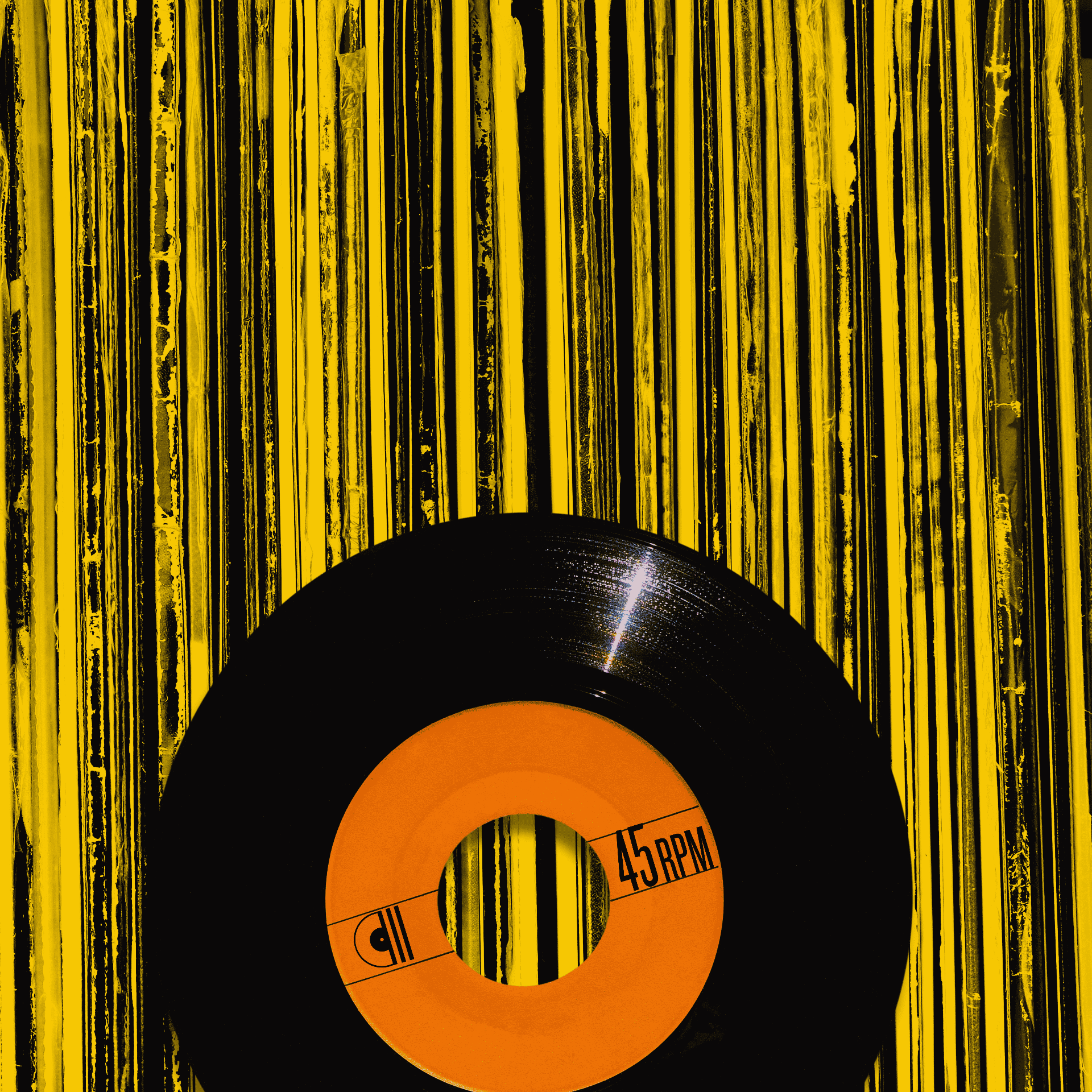
A 45 is a 7 inch single, spinning at 45 revolutions per minute. RCA Victor launched the format in 1949 as a compact, cheap, durable alternative to the fragile 78 RPM shellac discs that came before it. One song per side, around three to four minutes a side.
The big hole in the middle isn’t a mistake. It was designed for jukeboxes, which used a fat spindle to drop and stack records quickly. Domestic turntables needed a plastic adapter (the ‘spider’) to play them at home.
For decades the 45 was the single. Every chart hit, every B-side curiosity, every northern soul stomper, every funk break, every reggae version — most of it first surfaced as a 7 inch. That’s why 45s are so heavily collected: rarity, regional pressings, picture sleeves, and the simple fact that one great song can change everything.
Today the 45 is alive and well. Reissue labels, soul and funk labels, indie singles, and DJ-only edits all still get cut as 7 inch 45s. They’re cheap to press, easy to flip, and they fit perfectly in a bag for a gig.
The reason the format survived the CD, the download and the streaming era in that order is a physical one. A 7 inch cut at 45 RPM has a wider groove per second of audio than a 33⅓ LP, which means a mastering engineer can push hotter levels and keep low-end intact without the stylus mistracking. On a good pressing, a 45 punches on a club system in a way an LP cut of the same song rarely does. That is why every soul and funk reissue label — Daptone, Colemine, Big Crown, Athens of the North, Kay-Dee, Diggers Factory — still leads with the 7 inch.
Regional pressings are where the collector economy lives. The same song pressed in Detroit on Motown, in Jamaica on Studio One, and in the UK on Tamla Motown are three different records with three different mastering chains and three different market values. Northern soul culture was built on this: British DJs in the late 1960s and 1970s spent thousands chasing US-only pressings of records that never charted at home, and the price of an obscure Chicago or Detroit 45 was set by whether the dancers at Wigan Casino or the Twisted Wheel would move to it. That secondary market still runs — a clean Frank Wilson 'Do I Love You (Indeed I Do)' on Soul (1965) last cleared over £25,000.
Reggae operates on the same principle at higher volume. From the late 1960s onward, Kingston sound systems used 7 inch pre-releases and blank-label dubplates as competitive weapons — a version cut for one system that nobody else had. Studio One, Treasure Isle, Upsetter and Wackies 7 inches from that period are among the tightest collector markets in music, precisely because the runs were small and the vinyl was played until it wore out. Jamaican original stampers almost always outperform any UK or US repress on low-end weight; the mastering culture there was built for outdoor bass.
The disco and hip hop worlds pushed the 7 inch even further. Tom Moulton's mid-1970s promo work turned the B-side instrumental into a genre in itself. Sugar Hill, Enjoy and early Def Jam issued rap on 12 inch first but often issued a 7 inch edit for radio and jukebox — those short-run 7s (Sugarhill Gang, Grandmaster Flash, Kurtis Blow, LL Cool J on the early promos) are now some of the harder finds in golden-era rap. Fondle 'Em, Rawkus, Stones Throw and Chocolate Industries kept the tradition alive into the indie era.
The picture sleeve is its own collectable universe. Japan produced picture sleeves for almost every domestic single from the 1960s onward, which is why Japanese-issue 7s of Western artists (Beatles, Bowie, Roxy Music, The Cure) command a premium regardless of the audio — the sleeve alone is the object. In the UK, picture-sleeve punk and post-punk 7s (early Rough Trade, Factory, Fast Product, Postcard, Small Wonder) established a design vocabulary that still governs indie singles today.
Practical notes for anyone starting a 7 inch shelf. Buy adapters in bulk — the plastic 'spiders' get lost and jam turntables. A 45 spindle for a Technics or Rega costs $10–20 and pays for itself in an evening. Store 7s vertically in dedicated 7 inch crates; stacking flat warps sleeves in weeks. Handle picture sleeves like a book, not a record — the paper is thin and split spines drop the value of an otherwise mint copy by more than half. And never file a 7 inch out of its sleeve on top of the crate. Two weeks in direct sun and you have a taco.
The 7 inch is also the format most closely tied to the physical act of DJing. A bag of 45s is lighter than a bag of LPs, mixes fast because tracks are short, and forces a selector to plan a set as a sequence of endings — which is why funk and soul 45 DJs (Keb Darge, Mr Bongo, Kenny Dope, DJ Format, Andy Smith, the whole Daptone stable) built entire careers on the format. If you want to understand why record culture is still a physical culture, the 7 inch — small, cheap, loud, disposable and endlessly collectable — is the shortest answer.