The Vinyl Atlas Guide to Buying a Turntable
From your first belt-drive under $500 to the DJ-standard Technics 1200, all the way up to six-figure audiophile decks — what to buy, why, and what you're actually paying for.
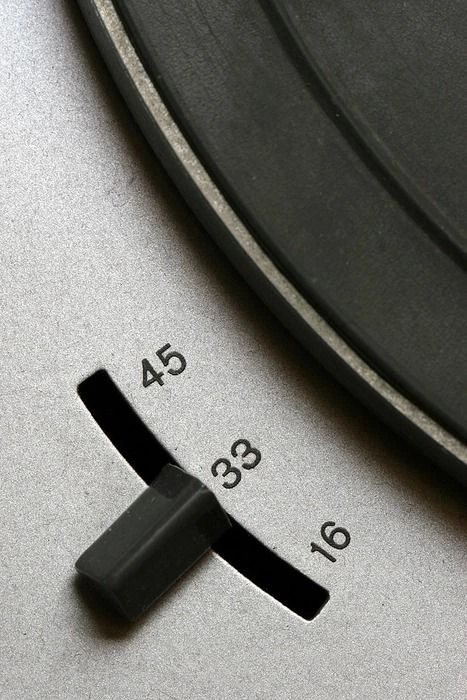
A turntable is three things at once: a precision motor, a tonearm that has to track a groove within a fraction of a millimetre, and a cartridge that converts a wiggle in vinyl into an electrical signal. Every price bracket is a different answer to the same question — how accurately, and how quietly, can those three parts do their job. This is our field guide to the whole market, from your first proper deck to the ones that cost as much as a car.
ENTRY-LEVEL HI-FI — $300 to $900. This is the bracket where vinyl actually starts sounding like vinyl. Skip the all-in-one suitcase decks (Crosley, Victrola, ION) — the ceramic cartridges and plastic platters chew records up over time. Start with a real belt-drive from a real hi-fi brand.
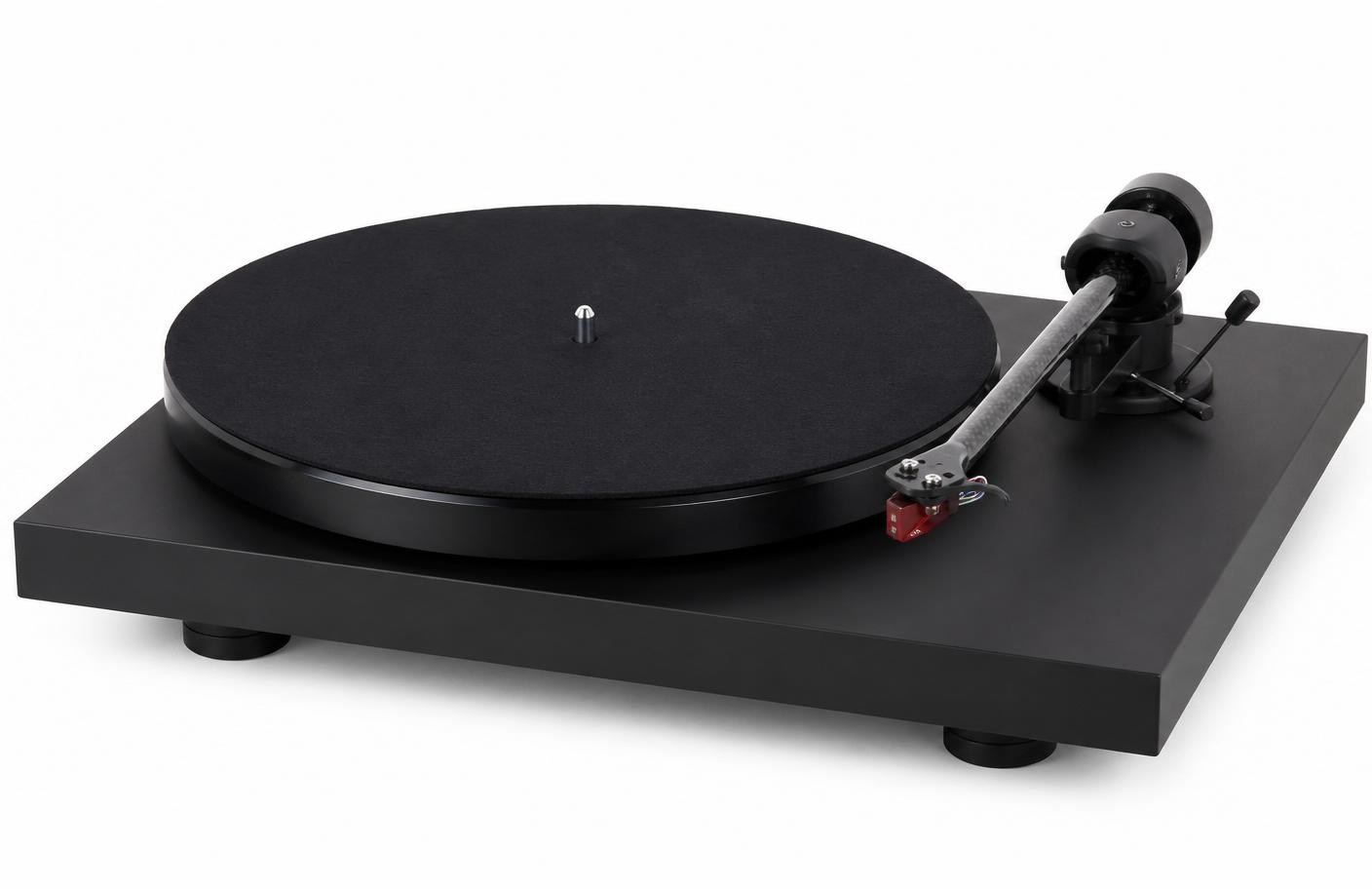
Pro-Ject Debut Carbon EVO ($599 USD). The default recommendation in this bracket for a decade running. Carbon-fibre tonearm, factory-fitted Ortofon 2M Red cartridge, heavy steel platter with damping, height-adjustable feet. Belt drive keeps motor noise out of the signal path. Made in Czechia by an Austrian family firm that only makes turntables. Almost impossible to buy wrong.
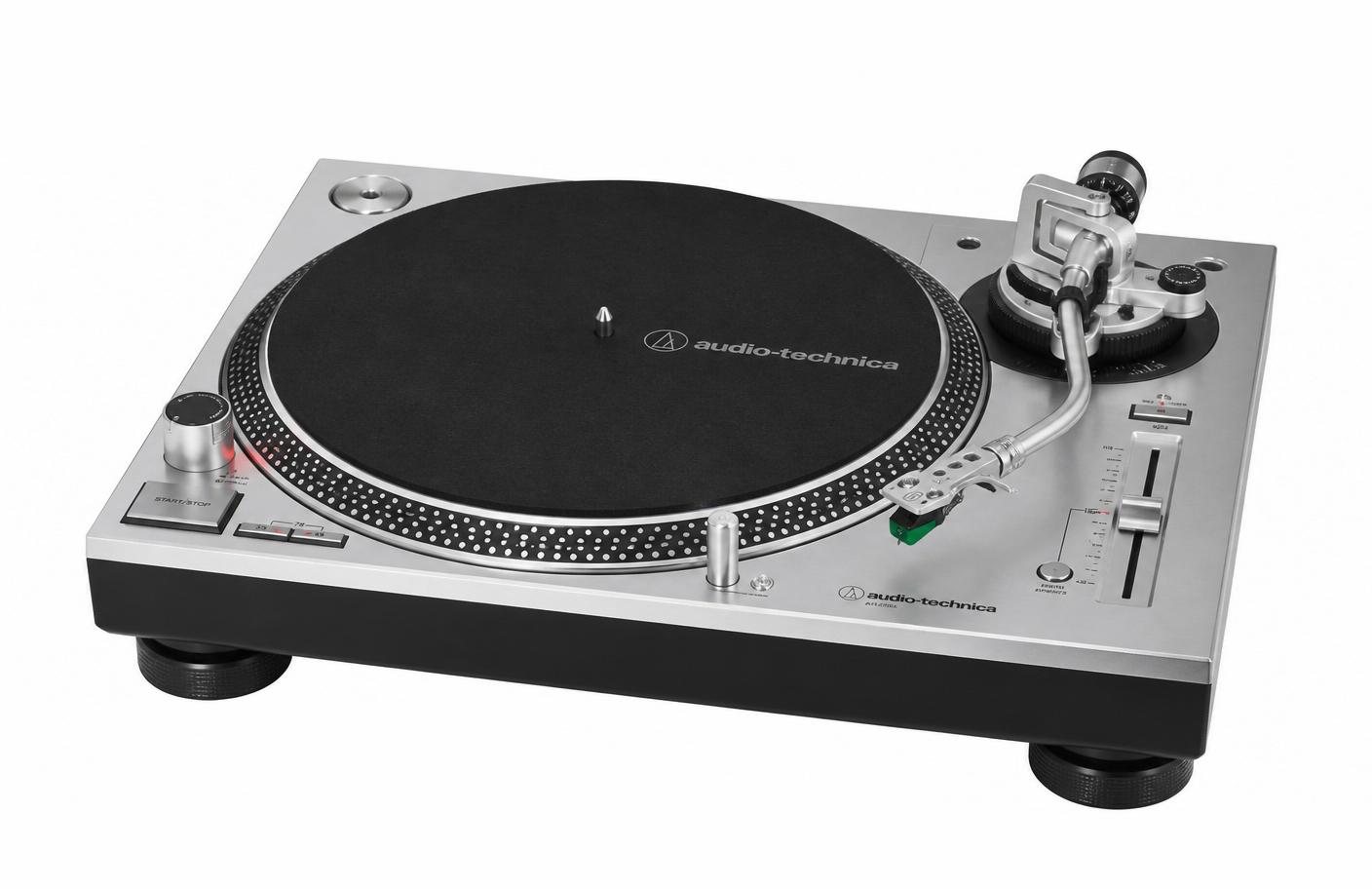
Audio-Technica AT-LP120XUSB ($349 USD) and AT-LP140XP ($499 USD). Audio-Technica's direct-drive line — visually inspired by the Technics 1200 but built to a hi-fi budget. The LP120X has a USB output for ripping records to digital, pitch control, and enough torque to be used as a home DJ deck. Excellent value; not quite Technics-grade in build, but ninety percent of the way there for a third of the money.
Rega Planar 1 ($475 USD) and Planar 2 ($775 USD). The British minimalist alternative. Fewer features, no cueing lever niceties, just a rigid plinth, a legendary tonearm and a musical presentation that hi-fi reviewers have been writing love letters about since the 1970s. If you care about sound over specs, start here.
MID-RANGE & PROFESSIONAL — $900 to $3,500. This is where two very different worlds sit side by side: the DJ world and the audiophile mid-tier. They look different, cost similar money, and are built for completely different jobs.
Technics SL-1200 MK7 ($1,199 USD) and SL-1210 GR2 ($2,199 USD). The most important turntable ever made. Direct drive means the platter is the motor — no belt to slip, no wow and flutter under load, instant start-up torque and pitch stability that a belt deck cannot physically match. That is exactly what a DJ needs: cue a record, drop the needle, hit start, and the platter is at 33⅓ in a quarter of a rotation. Pitch fader for beatmatching. High torque so scratching and back-cueing don't slow the platter down. A tonearm heavy and stable enough to survive a nightclub for twenty years. Every serious club booth on earth — Berghain, Panorama Bar, DC-10, Fabric, Smart Bar — runs 1200s or 1210s because nothing else survives the abuse. The MK7 is the current DJ-oriented model; the GR2 is the audiophile-tuned twin with a coreless direct-drive motor for lower rumble.
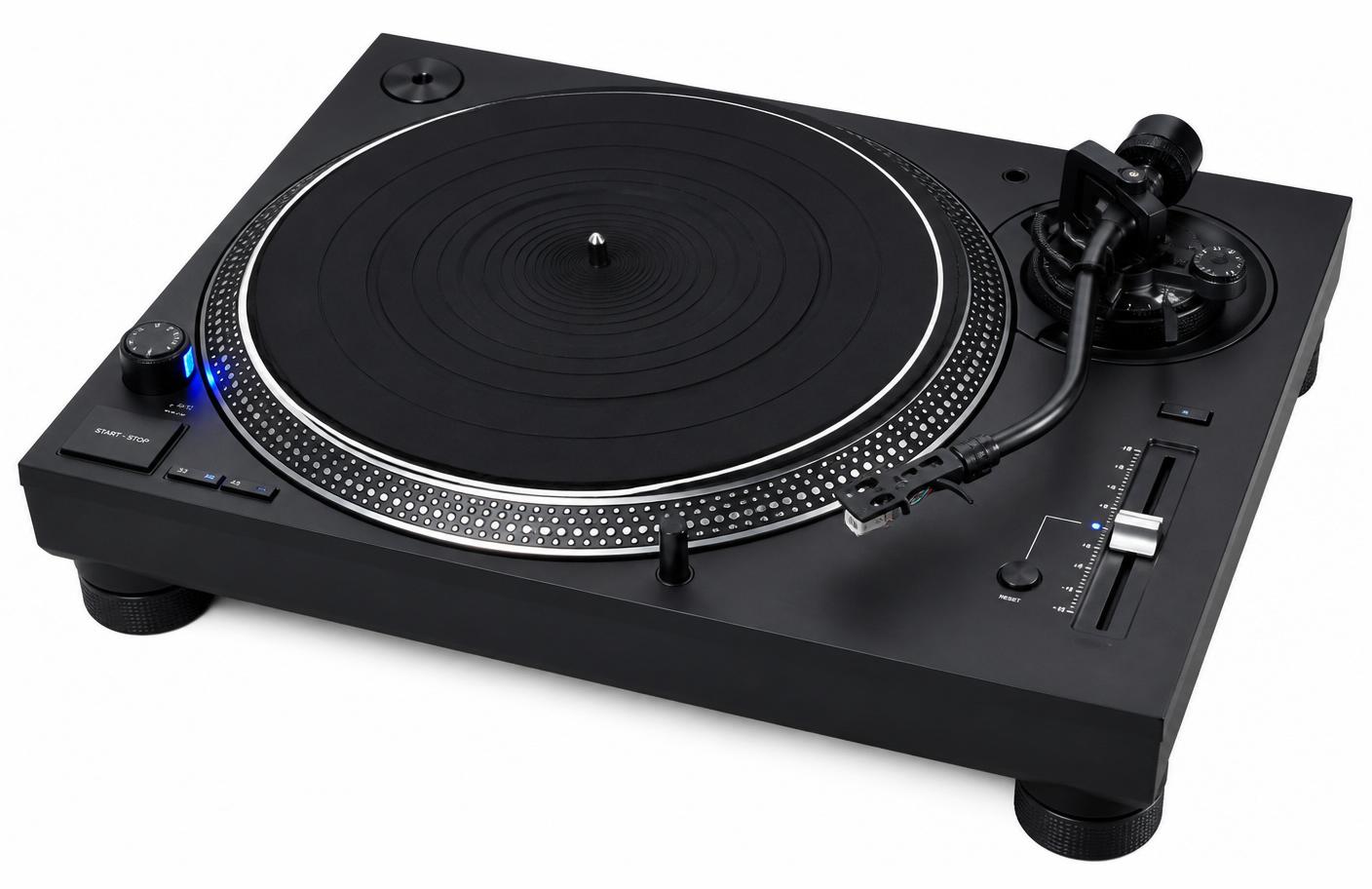
Reloop RP-8000 MK2 and Pioneer PLX-1000. The main competitors in the club-DJ space. Both are direct-drive, high-torque, S-shape-tonearm decks aimed at working DJs. Pioneer's PLX-1000 is the closest visual and functional clone of a Technics; Reloop's RP-8000 adds MIDI pads for controlling digital effects. Both are excellent; neither has quite the residual value or the myth of a Technics.
Rega Planar 6 ($1,995 USD) and Pro-Ject X2 B ($1,499 USD). If you're not DJing, this is the audiophile mid-tier. Belt-drive, ultra-low-noise motors, heavier platters, better tonearms, better cartridges. A well set-up Planar 6 with an Ania cartridge will out-resolve any DJ deck at any price for pure home listening — but you cannot back-cue it, and if you try to scratch it you'll destroy the bearings.

Direct drive versus belt drive — the honest version. Direct drive wins on torque, pitch stability, start-up speed and durability. Belt drive wins on motor isolation, low-level detail retrieval and background silence. A DJ needs the first list. An audiophile listening at home to a jazz record at 11pm cares about the second list. Neither is 'better' — they are optimised for different jobs.
HIGH-END AUDIOPHILE — $5,000 to $500,000+. This is where turntables stop being appliances and become engineering statements. You are paying for mass, isolation, machining tolerances measured in microns, and hand-built tonearms with unipivot or magnetic bearings.
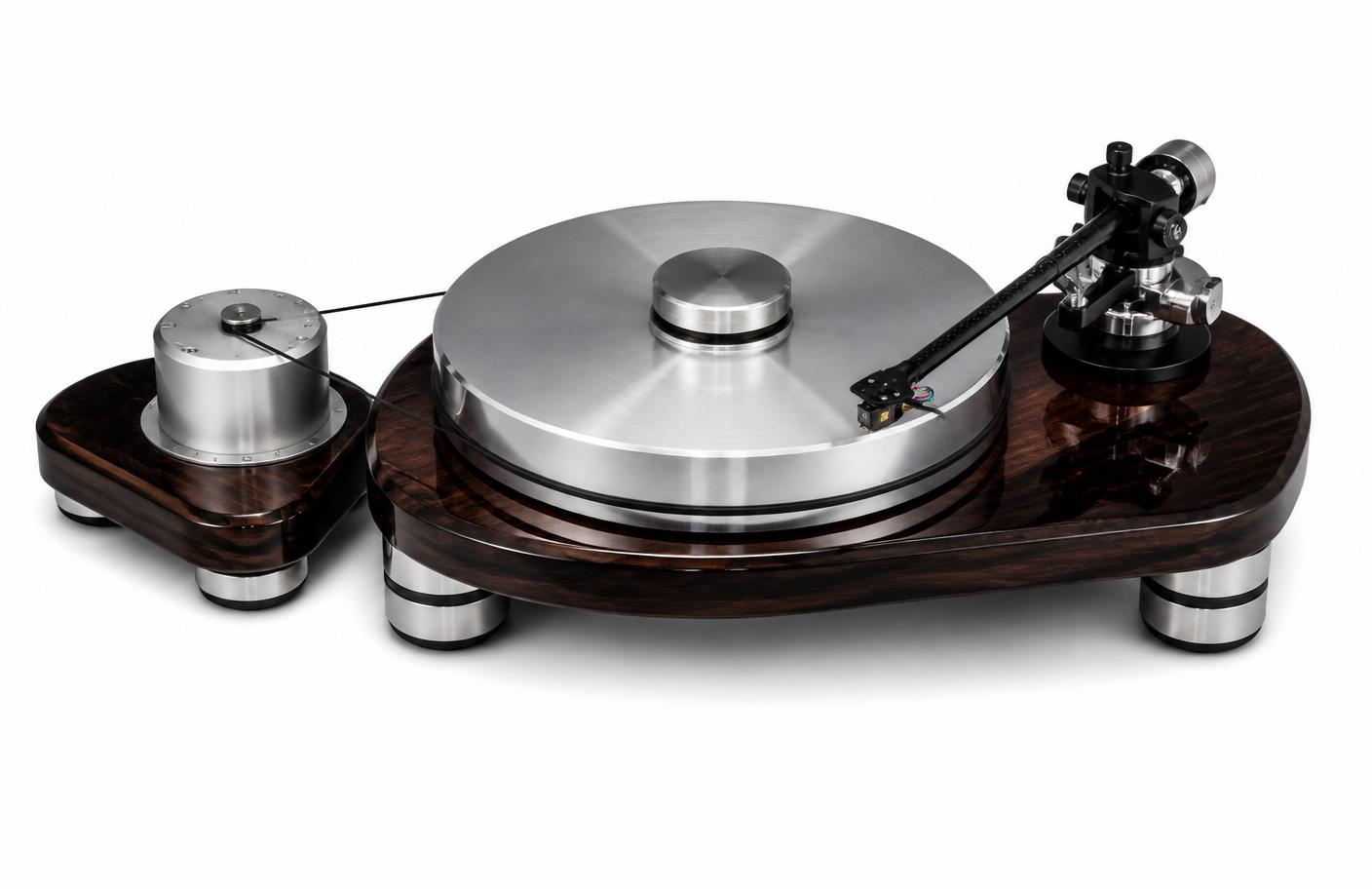
VPI Prime Signature ($6,000 USD, USA). Machined aluminium platter, 3D-printed tonearm, outboard motor pod on a separate plinth to isolate vibration. Made by hand in New Jersey by a small family firm. The American audiophile default.
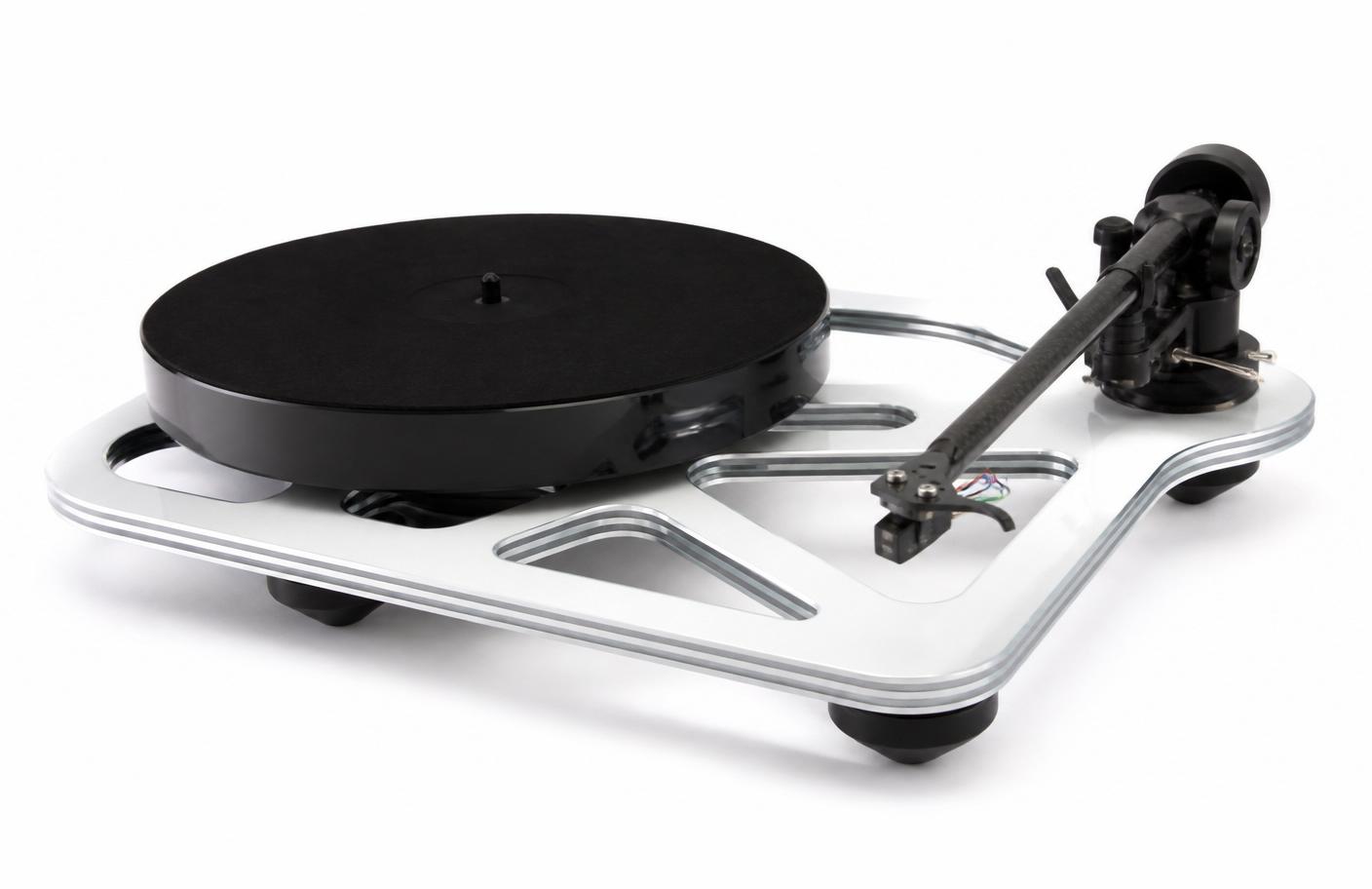
Rega Naia ($13,000 USD, UK). Rega's flagship. A skeletal ceramic-and-graphene plinth so stiff and light that the tonearm-cartridge-record system becomes the only resonant object left. This is what forty years of research into lowering mass — instead of adding it — looks like.
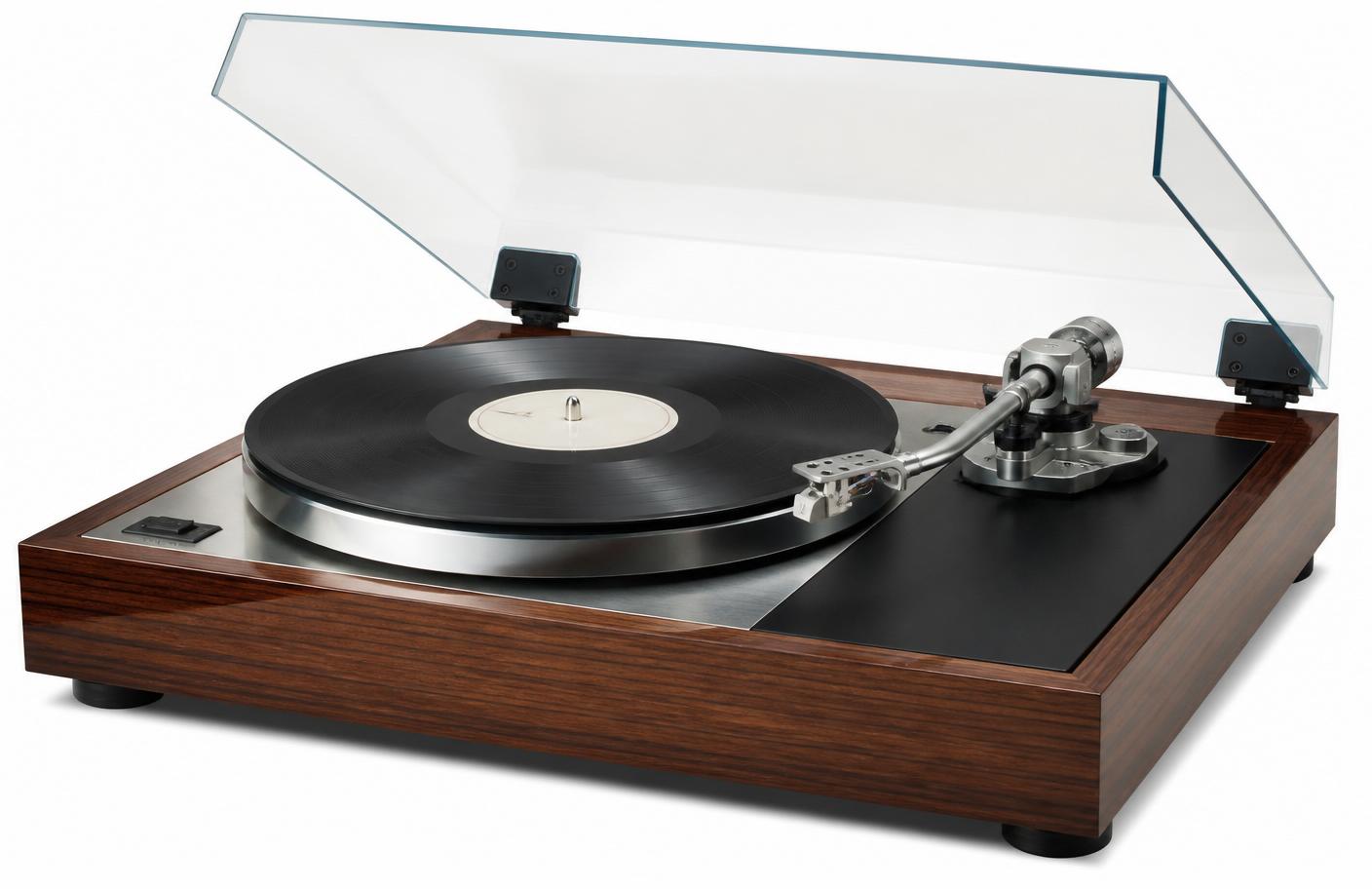
Linn Sondek LP12 (from $6,000 up to $30,000+ fully loaded, Scotland). Continuously built since 1972 and endlessly upgradable — every LP12 sold in the 1970s can still be retrofitted to current spec. The whole audiophile hobby of iterative, tweakable, subsystem-by-subsystem improvement essentially started with this deck.
Clearaudio Master Innovation ($25,000+, Germany). Magnetic-drive platter, ceramic-magnetic bearing, optical speed sensor. German precision-engineering brought to full bear on the analogue problem.
TechDAS Air Force series (Japan). The Air Force III is around $30,000. The Air Force Zero, at the top of the range, is $500,000 without a tonearm. Vacuum record hold-down, air-bearing platter, four-layer chassis. This is the ceiling of the current market.
Cartridges — the invisible cost. On any deck above $1,500, the cartridge is often worth as much as the turntable itself. Ortofon, Dynavector, Lyra, Koetsu, Van den Hul, Kiseki. A $3,000 moving-coil cartridge on a $2,000 Rega will beat a $6,000 deck with a $200 cartridge every day of the week. Budget accordingly.
WHAT WE'D BUY. First deck, home listening: Pro-Ject Debut Carbon EVO. First deck, mixed home + occasional DJing: Audio-Technica AT-LP120XUSB. Serious home listening under $2k: Rega Planar 3 or Planar 6. DJ booth, forever: Technics SL-1200 MK7 in pairs. Endgame audiophile: Linn LP12 or Rega Naia — pick your religion, both are correct.
THE PHONO STAGE — the piece nobody tells you about. A turntable outputs a signal about one thousand times quieter than a CD player, on a curve deliberately distorted at cutting (the RIAA curve) that has to be electronically un-distorted on playback. That job is what a phono stage does. Every entry-level deck in this guide already includes one; every deck from the Planar 6 upward does not. Budget a real phono stage — Rega Fono, Pro-Ject Phono Box, Schiit Mani, Musical Fidelity LX2-LPS at the entry end; Sutherland, Musical Surroundings, Chord Huei and Manley Chinook at the serious end. A great cartridge into a cheap phono stage sounds like an average cartridge; the reverse is not true.
MOVING MAGNET vs MOVING COIL cartridges — the honest primer. Moving magnet (MM) cartridges have a heavier moving mass, output around 3–5 millivolts, and work with any standard phono stage. They are the sensible default up to about $1,500 total system money. Moving coil (MC) cartridges have a lighter moving mass, retrieve more detail and low-level information, but output only 0.2–0.6 millivolts and therefore require either a step-up transformer or a dedicated MC-capable phono stage. If you're moving above $2,000 in total turntable investment, MC is where the audible upgrades live. Below that, better to spend the MC money on a better MM (Ortofon 2M Bronze or Black, Nagaoka MP-200) and a better phono stage.
TONEARM GEOMETRY, briefly. Every straight tonearm on every deck in this guide is a compromise between two errors — 'tracking error' (the stylus tangent to the groove) and 'skating force' (the arm's tendency to pull inward). The alignment protractors that come with better decks (Baerwald, Löfgren, Stevenson) let you optimise one or the other. If you set up your own deck, print or buy a Baerwald protractor, follow the alignment instructions carefully, and set the tracking force to the middle of the cartridge manufacturer's stated range using a $30 digital stylus scale. Wrong alignment or wrong tracking force will destroy records at a rate that has nothing to do with how expensive the cartridge is.
PLATFORM AND ISOLATION. A turntable is a microphone pointed at the floor. Foot-fall, subwoofer vibration, refrigerator hum in the next room — all of it feeds back through the plinth into the cartridge. On any deck above $1,500, the single biggest audible upgrade you can make for free is moving it off a hollow-legged IKEA rack and onto either a heavy hardwood shelf on the wall (Symposium, Target, IsoAcoustics wall shelves) or a proper isolation platform (Townshend Seismic Podium, HRS, SolidSteel). Suspended-subchassis decks like the Linn LP12 and Michell GyroDec are especially sensitive to what they sit on; a modest platform under an LP12 can outperform a $3,000 tonearm upgrade.
RECORD CARE. The single most valuable thing you can buy after the cartridge is a proper record cleaning solution. A Loricraft PRC4, Keith Monks Discovery, Degritter ultrasonic ($3,000–$6,000) is the endgame; a Pro-Ject VC-S2 or Okki Nokki ($500–$800) is the sensible mid-tier; a $30 Big Fudge or Analogue Studio manual brush plus a bottle of Audio Intelligent Vinyl Solutions cleaner is the entry-level answer that still audibly outperforms doing nothing. A cleaned record measurably reduces stylus wear, extends cartridge life, and lowers surface noise on every play. Any collector serious enough to buy a $2,000 deck without owning a cleaning system is throwing money at the wrong end of the chain.
A WORD ON SUITCASE PLAYERS. Crosley, Victrola and ION Audio all-in-one suitcase decks are the single most-returned-to complaint on any turntable forum, so it needs saying once, clearly: they will damage your records. The tracking force on most models runs at 5–7 grams (a proper deck runs at 1.5–2.5 grams), the cartridges are ceramic rather than magnetic, and the built-in speakers vibrate the platter through the plinth on every play. Every collector on Earth started with one of these decks; every collector on Earth eventually realised the records they played on it are permanently degraded. If your budget is genuinely $100 and you cannot stretch to a used AT-LP60 or a used Rega Planar 1, buy the records now and wait to buy the deck. Do not press cheap vinyl into a suitcase deck.
SPEAKERS AND AMPLIFICATION, in one paragraph. A turntable is one third of a system. Budget roughly evenly across source (turntable + cartridge + phono stage), amplification, and speakers — spending $2,000 on a turntable feeding a $200 Bluetooth speaker is not a hi-fi system, it is a turntable in a room. Real starting points for the rest of the chain: a NAD C 316BEE V2 integrated amp ($500) or Rega io ($550), a pair of Q Acoustics 3020i ($350) or Wharfedale Diamond 12.1 ($400) bookshelves on proper stands. From there the ladder goes upward indefinitely; the point is that the ladder needs three legs to stand.
THE USED MARKET is where value lives. A used Technics SL-1200 MK2 from 1988 that has been serviced by a specialist (Ammar Kutty in London, KAB Electro Acoustics in the US) will outperform every new deck under $1,500 and will last another thirty years. A used Rega Planar 3 with a fresh belt and a decent MM cartridge is often the best $500 you can spend on hi-fi in any category. A used Linn LP12 from the 1980s, sent for a Cirkus / Karousel bearing upgrade and a new plinth, is genuinely competitive with any deck under $10,000. The used market rewards knowledge; do the reading before you buy, always ask for a service history, and factor a professional setup ($100–$300) into your budget on any used deck over $500.