Sub Pop & Seattle — Indie Rock's Spiritual Home, Still Pressing the Best Records
How Sub Pop built the modern indie label playbook from Seattle, and why its current roster — Beach House, The Shins, Fleet Foxes and more — still defines great indie on vinyl.
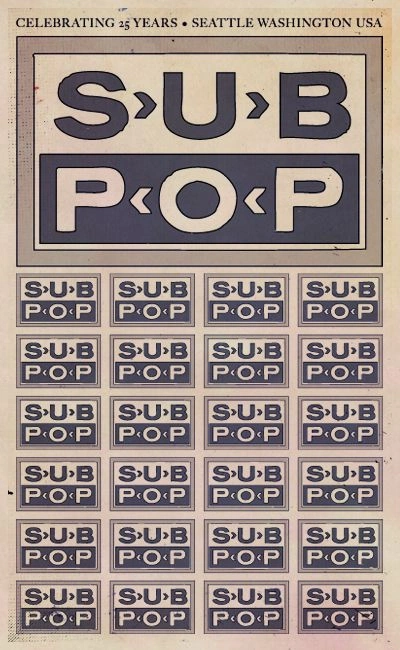
Sub Pop is the single most influential independent record label of the last forty years. Founded in Seattle in 1988 by Bruce Pavitt and Jonathan Poneman, it did two things at once: it invented the modern indie label playbook (limited coloured vinyl, subscription clubs, self-mythologising sleeve art, a fanzine attitude) and it pressed the records that defined a decade — Nirvana's 'Bleach', Mudhoney's 'Superfuzz Bigmuff', Soundgarden's 'Screaming Life', Tad, Green River. Grunge, as a scene, is more or less a Sub Pop catalogue number.
The remarkable part isn't that Sub Pop survived grunge. It's that the second act is arguably better than the first. Somewhere around 2001, with the signing of The Shins, the label pivoted from Pacific Northwest heavy music into a much wider indie-rock, folk, and dream-pop remit — and the hit rate has been extraordinary ever since.
Beach House, whose entire back catalogue from 'Teen Dream' through 'Once Twice Melody' sits on Sub Pop, are already collector territory — coloured Loser Editions of 'Teen Dream' and 'Bloom' regularly clear over $100. The Shins' 'Oh, Inverted World' and 'Chutes Too Narrow' are indie-vinyl staples that never go cold. Fleet Foxes' self-titled debut and 'Helplessness Blues' are on their way to becoming the 'Pet Sounds' of their generation.
The current roster keeps the standard. Father John Misty ('I Love You, Honeybear', 'Pure Comedy'), Sharon Van Etten, Kyle Craft, Weyes Blood's earlier material, Clairo (via Fader / Sub Pop distribution partnerships), Nathaniel Rateliff, Low's final trilogy ending in 'HEY WHAT', METZ, Shabazz Palaces, and Postal Service's 'Give Up' — still the label's best-selling record in its history, and still a cheat code on any indie shelf.
The Loser Edition is the collector's shortcut. Sub Pop presses a limited coloured variant of most releases, marks it 'Loser Edition', sells it exclusively through independent record stores and their own mailorder, and lets the market do the rest. Buying Sub Pop Loser Editions on release is, historically, one of the more reliable long-holds in modern vinyl collecting.
Seattle itself remains the spiritual home. Sub Pop still runs its retail store at Sea-Tac Airport — one of the few airport shops in the world worth going to — and the city's record store scene (Easy Street, Sonic Boom, Jive Time, Daybreak, Wall of Sound) continues to hold up the wider ecosystem. Indie rock has other capitals now, but the deed is still in Seattle.
The pre-history of the label is worth telling because it explains the aesthetic. Bruce Pavitt started 'Subterranean Pop' as a photocopied fanzine at Evergreen State College in Olympia in 1979, then converted it into a monthly cassette compilation series ('Sub Pop 5', 'Sub Pop 9') documenting the American underground long before there was a Seattle scene to speak of. When he and Jonathan Poneman finally incorporated Sub Pop Records in 1988, the first release was Bruce Fairweather's Green River 'Dry as a Bone' EP — a band that split into Mudhoney and Mother Love Bone, the latter of which became Pearl Jam. Every strand of what became grunge is in that one 12 inch.
Charles Peterson's photography and Jack Endino's production are the two other pillars that most casual listeners overlook. Peterson's grainy, blurred, over-flashed live shots essentially defined how the world saw grunge — his book 'Screaming Life' collects the essential images. Endino, working out of Reciprocal Recording in Seattle's Ballard neighbourhood, produced Nirvana's 'Bleach' for $606.17, Soundgarden's 'Screaming Life' EP, Mudhoney's 'Superfuzz Bigmuff' and dozens of other early Sub Pop records on the same cheap two-inch tape machine. That specific sonic signature — mid-heavy, drum-forward, roomy — is what people mean when they say 'the Sub Pop sound', and it is a Jack Endino sound as much as it is a label sound.
The Singles Club is one of the great pieces of independent-label marketing in history. Launched in 1988, it was a subscription-only 7 inch series — one previously unreleased single every month, pressed in limited numbers, mailed direct to subscribers. Nirvana's 'Love Buzz' / 'Big Cheese' was Singles Club #1 and originally shipped in a run of 1,000 numbered copies. That single now regularly clears $1,500 to $3,000 in mint condition. The full Singles Club run from 1988 to 1993 is one of the most sought-after 7 inch box completions in the entire indie market.
The label's near-death and second-life story is instructive. When Nirvana signed to DGC in 1990 for what was, at the time, a large licensing payout, Sub Pop essentially banked the future of the label on that one deal. Poneman and Pavitt then spent the next decade being called 'the label that almost went under three times', including a period in the mid-1990s when they were reportedly weeks away from bankruptcy. The turnaround came through the Warner Music partial ownership deal (Warner bought 49% in 1995) which stabilised distribution, and through a series of A&R decisions — Sunny Day Real Estate, The Shins, Iron & Wine, Postal Service — that quietly rebuilt the roster into something bigger than grunge ever was.
Hardly Art, Sub Pop's fully-owned sister label founded in 2007, is the current place to watch. It has released Shannon and the Clams, La Luz, Chastity Belt, Colleen Green, S, Rose Elinor Dougall, and a rotating cast of indie rock and garage acts, and its coloured-vinyl pressings are already appreciating on the secondary market at rates comparable to early-2010s Sub Pop Loser Editions. A lot of the more interesting new Seattle and Portland acts sign to Hardly Art rather than the main label these days.
The Pacific Northwest studio ecosystem sits alongside Sub Pop and is inseparable from it. Robert Lang Studios (where Foo Fighters' first album was cut and where Nirvana's last studio session took place in January 1994), Avast Recording, London Bridge Studio (Pearl Jam's 'Ten', Alice in Chains' 'Facelift', Temple of the Dog), the various Steve Fisk and Phil Ek production credits, Chris Walla's Hall of Justice — the record you hold in your hands is often as much a document of a specific Seattle room as it is of a specific band.
The other Pacific Northwest labels are the ecosystem Sub Pop grew inside, and none of them should be forgotten. K Records in Olympia (Calvin Johnson's imprint, home to Beat Happening, Built to Spill, Modest Mouse's earliest 7 inches, Beck's 'One Foot in the Grave'), Kill Rock Stars (Bikini Kill, Sleater-Kinney, Elliott Smith, The Decemberists), Estrus Records (garage rock — Mono Men, The Mummies, The Makers), Empty Records, and later Suicide Squeeze and Barsuk form a continuous alternative-music infrastructure that runs from Olympia through Portland to Seattle. Any serious Pacific Northwest indie shelf has to have Sub Pop, K and Kill Rock Stars sitting next to each other.
For the collector: the first-press indicators on early Sub Pop are specific and worth learning. 'Bleach' first pressings were on white vinyl in an edition of 1,000 with a hand-drawn Sub Pop logo on the labels; second pressings on white were 2,000; the first black-vinyl pressing came slightly later. 'Superfuzz Bigmuff' first pressings were on black vinyl with a specific matrix (SP-21) etched into the runout. 'Dry as a Bone' first pressings had a black-and-white insert and 'SP 11' hand-etched. Getting those details right — matrix numbers, insert type, sleeve variant — is the difference between a $50 record and a $500 record.