Store Etiquette: What Record Stores Love & Hate with Customers — and Why
The unwritten rules of digging — what makes you welcome behind the counter, and what makes the staff quietly hate you.
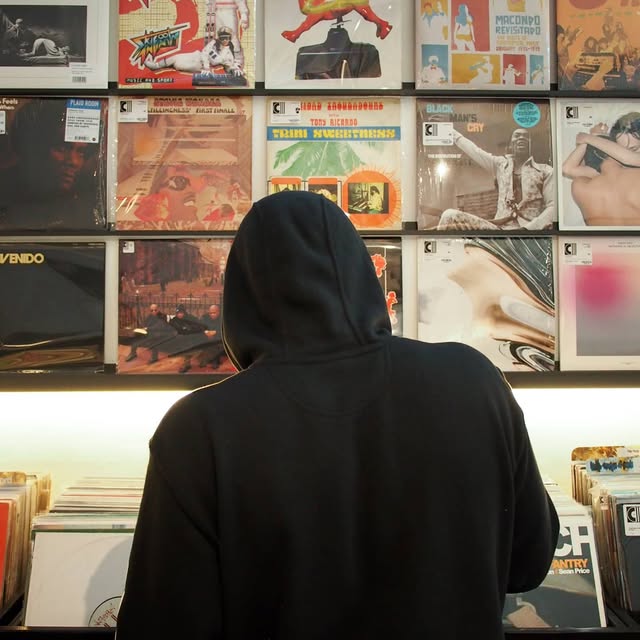
Most record store staff are not gatekeepers. They’re people who took a pay cut to work around music all day. They want you to find something great. But there’s a short list of behaviours that will get you respected at the counter — and a shorter list that will get you ignored.
Loved: Putting records back in the right section. Putting them back in their sleeves the right way (open side up, never down). Asking questions when you actually want an answer. Buying the record you spent forty minutes flipping past. Coming in, browsing quietly, and saying hi.
Hated: Leaving records on top of the bins. Leafing through stock with greasy fingers or a coffee in hand. Filming TikToks in the racks without asking. Quoting Discogs prices at the staff. Asking ‘what’s good?’ with no other information. Trying to haggle on a $12 record.
The biggest unwritten rule: the store is not a museum and the staff are not your concierge. If you treat the space and the stock with care, and the staff like humans, you will get tipped off to the good stuff — the back-room boxes, the unopened delivery, the record they’re holding for someone who never came back.
A record store is one of the last places in a city where strangers still talk to each other about something they love. Don’t be the person who ruins that.
The economics behind the counter are worth knowing, because they explain almost every 'weird' rule a store has. Most independent record stores in 2026 operate on gross margins of 25–35% on new vinyl (the distributor takes the rest) and 40–60% on used stock. Rent, insurance, freight from overseas suppliers, and a single wage for one full-time person eat almost all of that. The store you love is almost certainly clearing less profit annually than one senior software engineer's monthly salary. That is why 'can you do a deal on this $12 record' lands so badly — the margin on that record is already about $3.
This is also why the used counter matters more than the new wall. The margin on used is what actually keeps the lights on, which is why stores treat house-call estimates, estate collections and walk-in buys as their most important customer interaction. If you have a collection to sell, the etiquette is: email photos of the spines in advance, don't quote Discogs 'median' prices at the buyer (Discogs medians ignore condition and shipping), be prepared for a cash offer that is roughly 40–50% of what the store expects to retail it for, and understand that they will pass on 60% of any given collection. That is not rudeness — it is inventory management.
The listening station is a social contract, not an entitlement. In most European and North American stores, the convention is: you can play anything you're seriously considering buying, but not build a two-hour DJ set. In Japan the convention is stricter — you ask, the staff cues the needle, you listen through headphones for a track or two, you decide. In the UK dance scene, a good store will let a working DJ pre-listen a stack of ten to fifteen 12 inches without complaint because that DJ is likely to buy half of them. Learn which room you are in.
A short list of things that mark you as a serious customer without you saying anything. Carrying an empty record bag or tote. Asking whether the store has anything not on the floor (many do — 'back-of-house' or 'not-yet-priced' stacks are how the good stock moves before it hits the shelves). Knowing which section a record belongs in when you put it back. Not slamming the divider cards. Pulling records out from the top rather than yanking from the middle. Buying one thing on your first visit, even something small, before asking for tip-offs on your second.
A shorter list of things that quietly end the relationship. Filming the racks for social media without asking (a lot of stores now have a printed 'no filming' policy specifically because of this). Loud phone calls in a small room. Bringing an open cup of coffee anywhere near the bins. Asking staff to price-match Discogs or eBay listings. Trying to sell the store a battered copy of a record they already have three of on the wall. Sitting down on the floor to dig with your legs blocking the aisle.
The tip-off economy is real and it is the whole reason to have a local. Every serious store keeps a mental (and often written) list of regulars who buy specific things — the northern soul digger, the Japanese ambient collector, the boogie DJ, the modern-classical head — and puts records aside for them before the delivery even hits the floor. Becoming one of those names takes six to twelve months of showing up, buying honestly, and being specific about what you're looking for. It is one of the few remaining relationships in retail that actually gets more valuable over time.
One more thing about staff. The person behind the counter is very often the owner, or the person the owner trusts most with the buying budget. They are not there to sell you a record; they are there to keep the store alive by turning inventory. If you ask 'what's good?' the answer is genuinely 'what do you like?' — not because they're being difficult, but because a store of ten thousand records has ten thousand answers and they need one input from you to give you a real one. Bring three artists you already love and you'll walk out with something you didn't know existed.
The last unwritten rule, and the one most worth learning: a great record store is a slow-building trust exchange, not a transaction. Treat it that way and, over a couple of years, it becomes the single best filter on new music you will ever have — better than any algorithm, any critic, any friend. That is the actual product a record store sells. The records are almost incidental.