Digging South East Asia & China — The Last Great Frontier for Crate Diggers
Kuala Lumpur back-alley shops, Shanghai basement stacks, Manila 45 boxes, Bangkok mor lam bins, and the new wave of Asian hi-fi vinyl bars.
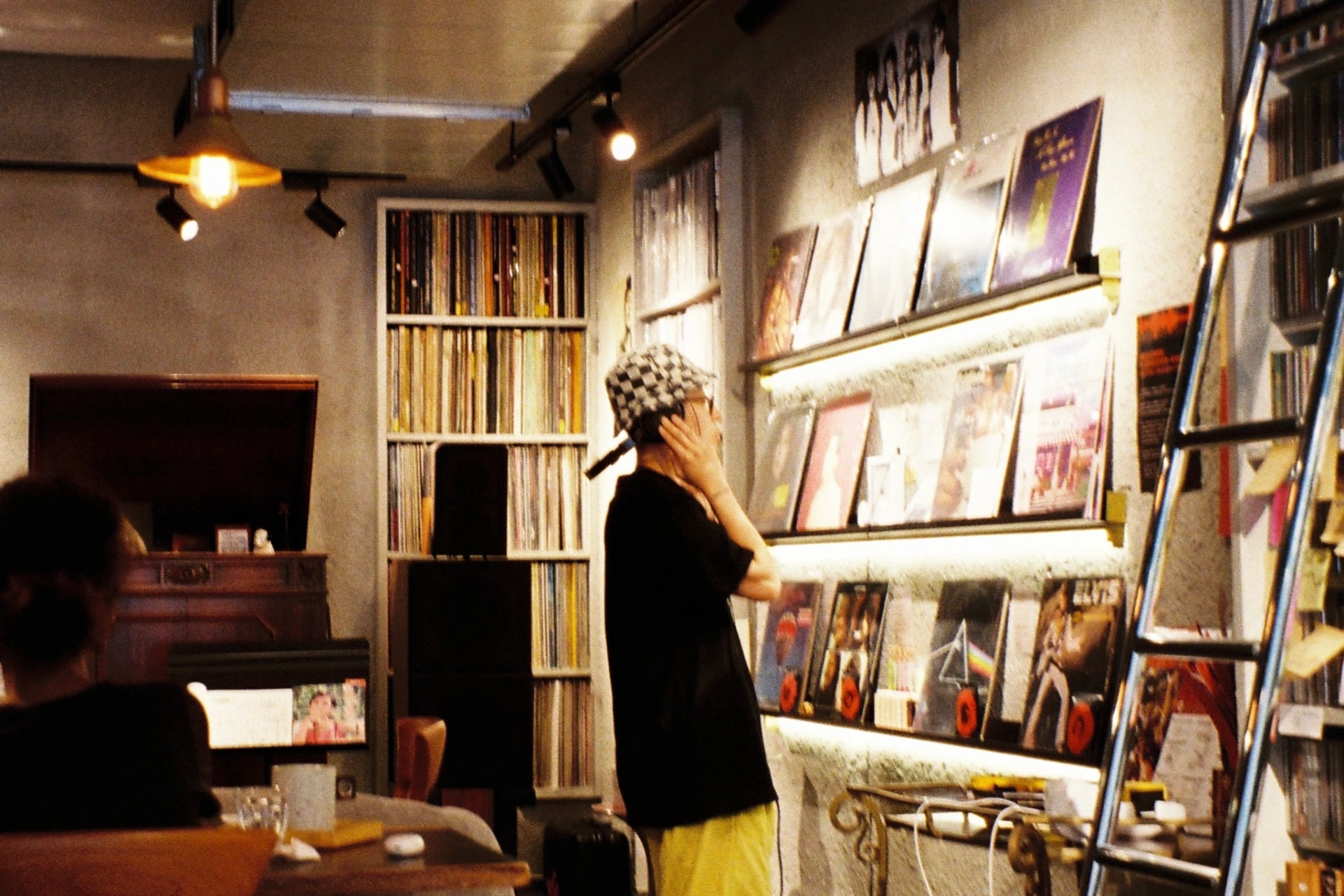
For a long time the vinyl map of Asia stopped at Tokyo. Everyone knew about Disk Union, Face Records and the endless jazz kissa of Shibuya and Shimokitazawa. Seoul got its due more recently — Gimbab Records, Dope Records, Clique — off the back of a K-pop and city-pop revival. But the rest of the continent has quietly become the last genuinely undug frontier on Earth, and the diggers who know are already booking flights.
China is the surprise story. For thirty years vinyl was effectively banned, then ignored. In the last five years Shanghai has grown a small but serious scene: Uptown Records and Daily Vinyl in the former French Concession stock reissues, second-hand jazz, and a steady flow of returning-diaspora collections. Beijing's Indie Music and fRUITYSHOP cater to the punk and experimental scene that grew up around the D-22 club era. What's genuinely exciting is the used stock — old Cantopop, Shanghai jazz orchestra 78s and LPs, Chinese classical and revolutionary pressings — that until recently sat in family cupboards and is only now reaching the shops. Prices are still low. That will not last.
Hong Kong is the deep well. Decades of British colonial trade, an unbroken Cantopop industry, and a wealthy collecting class mean the city holds vinyl the mainland simply doesn't. White Noise Records in Tai Kok Tsui, Vinyl Hero (the legendary sixth-floor walk-up in Sham Shui Po where the late Paul Au sat behind a wall of records for over fifty years), and Zaki Records for jazz and soul remain destination stops. Sunday flea markets around Apliu Street still turn up sealed Anita Mui, Leslie Cheung and Sam Hui pressings for people who know what they're looking at.
Singapore is small but sharp. Choice Cuts Goods + Coffee in Kampong Glam pairs a tight curated selection with a proper hi-fi listening area. Retrocrates and The Analog Vault (in Esplanade Mall) run serious jazz, soul, and audiophile-reissue counters. Because Singapore was the pressing and distribution hub for a huge slice of 1960s–70s South East Asian pop, local dealers regularly turn up Malay pop yeh yeh, Indonesian dangdut, and Singaporean pop 45s that are almost impossible to find anywhere else.
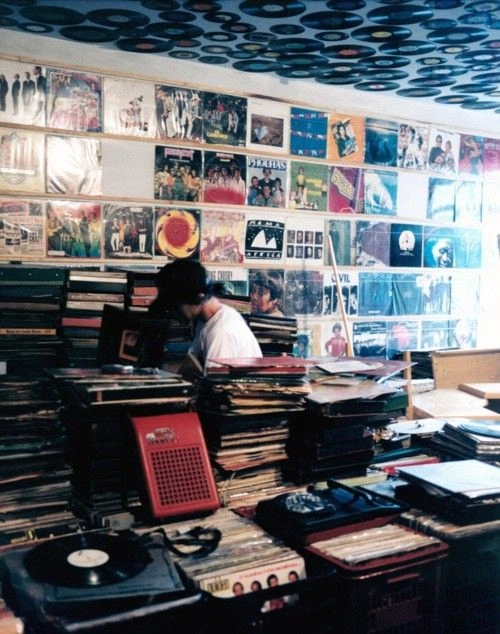
Malaysia is where it gets exciting for cheap stock. Kuala Lumpur's Amcorp Mall weekend flea market is still one of the most productive digs in the region — dozens of dealers, boxes on the floor, everything from Malay 45s to imported UK rock at prices Europe forgot in the 1990s. Teruntum Records and Ricecooker Shop in KL, plus Sinaran in Bangsar, run more curated storefronts. Penang has a small but tight scene around George Town.
Bangkok's Zudrangma Records is the pilgrimage. Maft Sai's shop and label single-handedly rebuilt the international reputation of mor lam, luk thung and Thai funk — reissuing artists like Dao Bandon, Waipod Phetsuphan and the Petch Phin Thong Band, and stocking the original 45s alongside. Nearby, Neyzen and Studio Lam (the label's sister bar) keep the ecosystem running. Manila is the sleeper city: Grey Market Records, Satchmi in Estancia Mall, and a rotating fair scene where OPM (Original Pilipino Music), Manila sound and 70s Filipino funk still surface for coins.
Jakarta is the largest untapped market on the continent. Demajors, LaruLalu and the Blok M second-hand shops sit on top of one of the deepest local recorded-music traditions in Asia — Koes Plus, Guruh Gipsy, Dara Puspita, and the entire early Indonesian rock and psych canon. Local reissue labels like La Munai are starting to work through it. Vietnam is earlier still: a handful of shops in Ho Chi Minh City (Vintage Vinyl, Ngau Ngau) and Hanoi, mostly used, mostly cheap, mostly wide open.
The other half of the story is the vinyl bar. Asia is now leading the global hi-fi bar movement — not just Japan any more. Potato Head's music room in Jakarta, Analog Room in Bali, and Bam Bam in Singapore built the template; the current standout is Le Beat in Shanghai, an all-vinyl, all-valve-amp vinyl bar that has become the anchor of the mainland Chinese hi-fi scene. Manila's Futur:st, Bangkok's Studio Lam and Rabbit Hole, and Kuala Lumpur's PS150 all run vinyl-first nights with proper systems. If you're planning a digging trip, book the bar for the evening after the shop — the selector will tell you where to dig next.
A few field notes. Cash is still king almost everywhere outside Singapore and Hong Kong. Bring sleeves — humidity is brutal and stock often ships in bare card. Ask before photographing behind the counter. And accept that a lot of the best rooms in Asia don't have a website, don't take Discogs orders, and won't come up on Google Maps in English. Ask the person at the vinyl bar. That is still, everywhere on this continent, how the good records find you.
The regional pressing plant story is essential context for anyone digging seriously in South East Asia. From roughly 1965 to 1978, most local pop across Malaysia, Singapore, Indonesia, Thailand, Vietnam and the Philippines was pressed at a small number of regional plants — EMI Malaysia in Petaling Jaya, Life Records in Singapore, Lokananta in Solo (Indonesia's oldest and still-operating pressing plant, founded in 1956), Metropolitan Records and Villar in Manila, and the various Thai plants around Bangkok. Those plants pressed in relatively small runs on variable-quality vinyl, and the entire physical inventory has been slowly attrited by 60+ years of tropical humidity. Any clean copy of a regional pop 45 from that period is now genuinely scarce, and the market has barely started to reflect it.
The genre map worth learning before you go. Thai luk thung and mor lam (the two dominant Thai country-music traditions — luk thung is polished and orchestrated, mor lam is rawer, Isan-region, khaen-driven), Thai funk and shadow music (surf-rock-adjacent 1960s Bangkok pop), Indonesian dangdut (Malay-Indian-Arabic pop fusion), Indonesian jaipongan (Sundanese percussion pop), Singapore and Malaysia's Malay pop yeh yeh (Beatles-influenced 1960s Malay-language guitar bands — kugiran), Filipino Manila sound (mid-1970s soft-rock and disco), Vietnamese nhạc vàng ('yellow music' — sentimental pre-1975 South Vietnamese pop), Cantopop, Mandopop, and the various regional Chinese classical and revolutionary catalogues. Walking into a Kuala Lumpur or Manila shop asking for 'Southeast Asian records' is like asking a Berlin store for 'European records'; specificity is what unlocks the good stacks.
The reissue scene has done real work here in the last decade. Sublime Frequencies (Alan Bishop's label out of Seattle) opened the door with their Thai, Cambodian and Indonesian compilations. Dust to Digital, Awesome Tapes From Africa's Asian offshoots, Sham Palace, Akuphone, Soundway's Cambodia Rocks series, Numero Group's Ethiopiques-adjacent work, and Zudrangma's own Bangkok-based reissue programme have collectively brought a slice of the region into international circulation. But the reissue scene has barely scratched the actual catalogue depth — for every reissued 45 there are hundreds still sitting in family boxes in Semarang, Chiang Mai, Danang and Cebu. That is precisely why the region is still worth the trip.
Cambodia deserves its own paragraph because the story is unlike anywhere else. Between 1960 and 1975 Phnom Penh had one of the most sophisticated pop scenes in Asia — Sinn Sisamouth, Ros Serey Sothea, Pen Ran, Yol Aularong, Baksey Cham Krong — a scene that was almost entirely destroyed by the Khmer Rouge, who murdered most of the country's musicians between 1975 and 1979. The surviving vinyl (mostly on Chan Chhaya and Wat Phnom labels) is one of the most emotionally weighted physical archives in music. Cambodia is not currently an easy dig on the ground — most surviving originals have already left the country via collectors like Paul Wheeler (of the Cambodian Vintage Music Archive) — but the reissue programmes on Dust to Digital, Sublime Frequencies and Metal Postcard are essential, and clean OG Cambodian pressings, when they surface at Utrecht or WFMU, move very fast at serious money.
The Japanese connection quietly runs underneath the whole regional market. Japanese collectors were the first outside buyers to seriously value Thai, Indonesian, Filipino and Cambodian pop, and Japanese specialist shops (Big Love, Los Apson?, Coconuts Disk, Enban, and the various Tokyo world-music specialists) still hold some of the deepest reserves of South East Asian vinyl outside the region itself. If you cannot get to Bangkok or Jakarta but you can get to Tokyo, a day in Koenji and Shibuya will get you further into the regional catalogues than most digs on the ground would.
A practical shipping and customs note. Shipping records out of South East Asia is straightforward — DHL, FedEx and EMS all handle vinyl reliably if you pack it correctly — but customs classification can be inconsistent. Declare as 'used personal LP records' at low value, keep original receipts, and be prepared for delays on outbound Vietnam and Indonesia shipments. Many diggers now hand-carry stacks in a proper LP-format flight bag as checked luggage; a hard-shell record flight case (Odyssey, Magma) is a worthwhile investment if you're going to do this more than once. And always, always ask for and keep the original inner sleeves — replacing tropical-damaged inners with fresh anti-static sleeves the moment you get home is the single biggest condition-preservation move you can make.