Record Fairs — Why Diggers Still Set an Alarm for Them
Trestle tables, hand-written price tags, dealers who've been doing this since 1978. What a real record fair is, and how to work one.
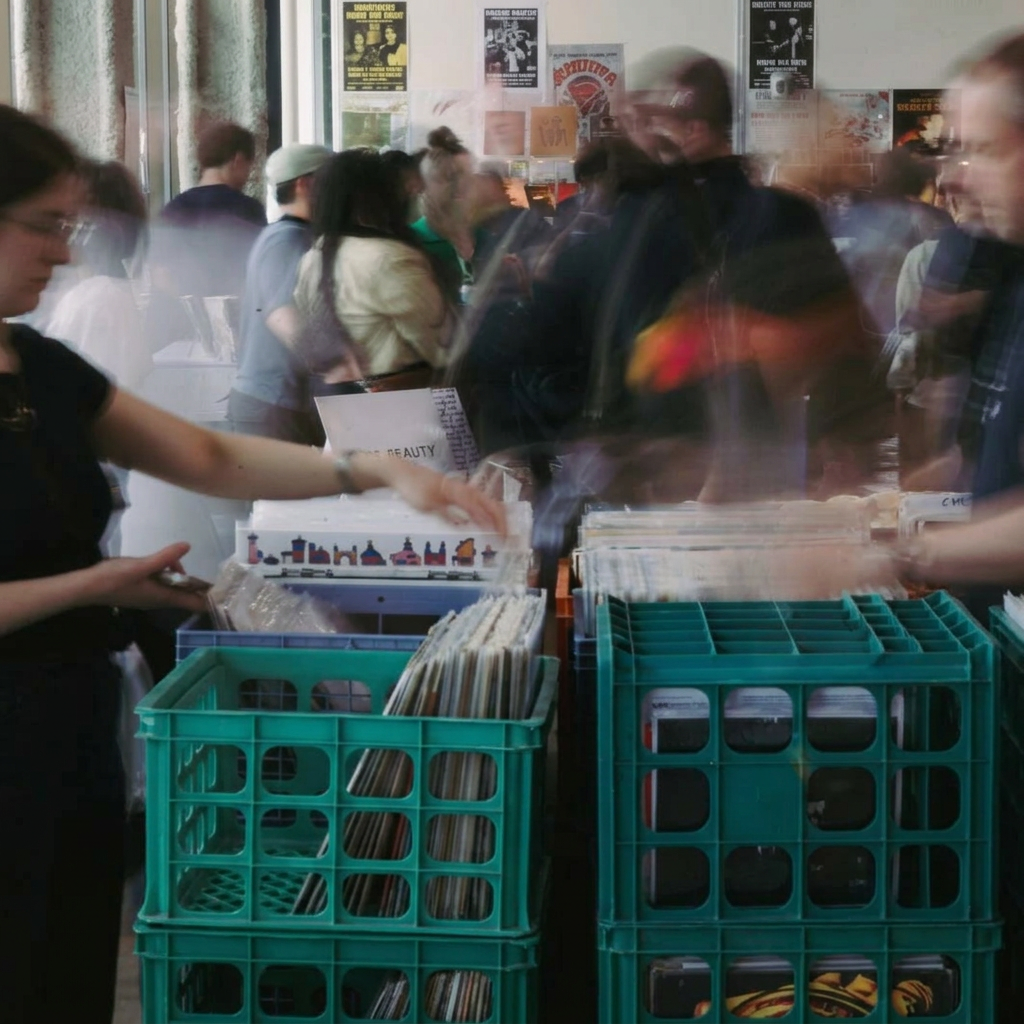
A record fair is a temporary market — usually a town hall, a hotel ballroom, a football club, an old cinema — filled for a day with dealers selling records out of milk crates and flight cases. No till system, no algorithm, no reissue-only stock. Just people who spend their lives buying, sorting and moving vinyl, meeting the people who buy it.
Fairs matter for two reasons. First, price: dealers price against each other in the same room, so bargains happen. Second, discovery: the boxes contain records that will never appear on Discogs, because the dealer picked them up in an estate deal yesterday and hasn't listed anything yet. The best finds at any fair are the ones that were on a shelf in someone's house 48 hours earlier.
Working a fair is a skill. Turn up at the door for the early-bird slot if there is one — the serious dealers buy from each other in the first hour and the good stock moves before general admission. Bring cash in small notes, a bag with a hard base, and a written want-list. Flip fast; ask a dealer for a genre and they'll point you at the right box.
The etiquette is the same as a good record store, only tighter. Put records back where you found them. Don't quote Discogs prices at a 60-year-old dealer who priced the record from memory. If you find a killer stack, negotiate the whole pile — not the $6 record on top.
The great fairs — Utrecht (Netherlands), Olympia (London), WFMU (New Jersey), Tokyo Big Sight — are worth planning a trip around. But the small ones — a local monthly in a suburban hall — are often where the real finds happen, because everybody serious has already flown to Utrecht.
Utrecht deserves an entry of its own. The Mega Record & CD Fair at the Jaarbeurs — held twice a year, spring and autumn — is by an enormous margin the largest record fair on earth: roughly 500 dealers, 20,000+ visitors across a Saturday and Sunday, and stalls representing essentially every specialist genre and country in the collectable-vinyl world. Serious buyers fly in from Japan, the US, Australia and every corner of Europe, book the early-bird 'trade day' on Friday, and buy from each other before the general public arrives. If you only ever attend one record fair in your life, Utrecht is the one; if you attend two, the second is WFMU.
The WFMU Record Fair in New Jersey (relocated in recent years from its historic Manhattan home) is the great American fair — smaller than Utrecht, weirder, and heavily weighted toward jazz, soul, garage, punk, hip hop and experimental music. WFMU-adjacent DJs, radio hosts and specialist dealers set the tone; the atmosphere is closer to a music-nerd convention than a commercial trade show. It typically runs Friday through Sunday in the autumn. The Vault Room upstairs, where the highest-end dealers set up, is worth the extra ticket if you're serious about condition and grail-tier stock.
London's fair circuit is a scene in itself. The bi-monthly Olympia Record Fair at the historic Kensington venue is the flagship. The Islington Record Fair (Angel), the East End Vinyl and Record Fair, the Spitalfields market vinyl day, the Brick Lane record fair and the recurring smaller fairs at Peckham's Bussey Building all rotate through the calendar. The Music Mania fair in Ghent (Belgium), the Berlin Vinyl Weekend around Record Store Day, the Paris Vinyl Show at Espace Charenton, Barcelona's Feria del Disco, and Amsterdam's Record Planet fairs form the rest of the European monthly rotation. Serious European diggers plan their year around them.
The Japanese fair scene runs on completely different logic. Tokyo Big Sight hosts the largest Japanese fair (the Tokyo Used Record Fair, usually in autumn), but the more consistently interesting events are the twice-yearly Disk Union warehouse sales in Ochanomizu and the semi-regular fairs at Nakano Broadway and the Shinjuku Marui Annex. Prices are firm — no haggling culture — but condition is uniformly excellent because Japanese collectors grade honestly and store meticulously. If you can only get to one Japanese fair, the annual Ochanomizu Disk Union warehouse sale is the industry insider pick.
The economics of a fair for the dealer are worth understanding, because they explain the pricing. A single table at a mid-tier European fair costs €150–€400 for the weekend. Travel, hotel, van hire, insurance, and staff shift add up quickly — a dealer usually needs to clear €3,000–€5,000 in sales just to break even on a weekend fair. That is why the good dealers price to move, why they will negotiate on a stack of ten records that they can wrap and be done with, and why the last two hours of Sunday are traditionally when the best deals happen (the alternative is packing everything back into the van).
The early-bird slot is where the actual market gets set. Almost every serious fair has a trade-only or 'early-bird' entry on the Friday afternoon or Saturday morning, typically €30–€50 above the general-admission ticket. The first hour of that slot is when dealers walk each other's stock and buy the trophies before the public arrives. If you want to see what the actual top-of-market prices are for a category, spend that first hour walking rather than buying, note what moves and at what price, and then come back with a better sense of what to bid on for the rest of the weekend.
A digger's pack list, from bitter experience. Cash in local currency in small notes (a lot of dealers still don't take cards, and the ones that do would rather not). A hard-bottomed record bag or backpack with dividers to protect finds. Anti-static inner sleeves in a Ziploc — for any expensive record you find in a battered original inner, you'll want to sleeve it before it moves. A UV torch for checking sleeve prints and hype stickers under raking light. A notebook or want-list in your phone. A bottle of water. Comfortable shoes. Snacks. Cash. Cash. Cash.
The unwritten rule of every fair is the same as every record store, only compressed. Be interested, be polite, be quick, and be honest about your budget. Dealers remember buyers who wasted their time and buyers who paid without a fuss, and the second category gets first refusal on the good boxes the next time around. A fair is a floating city that exists for 48 hours; every relationship you build inside it lasts across all the future weekends.