Why Physical Beats Digital — For the Artist and the Listener
Artwork, liner notes, sequencing, sound, ownership and money — the full case for buying the record instead of renting the file.
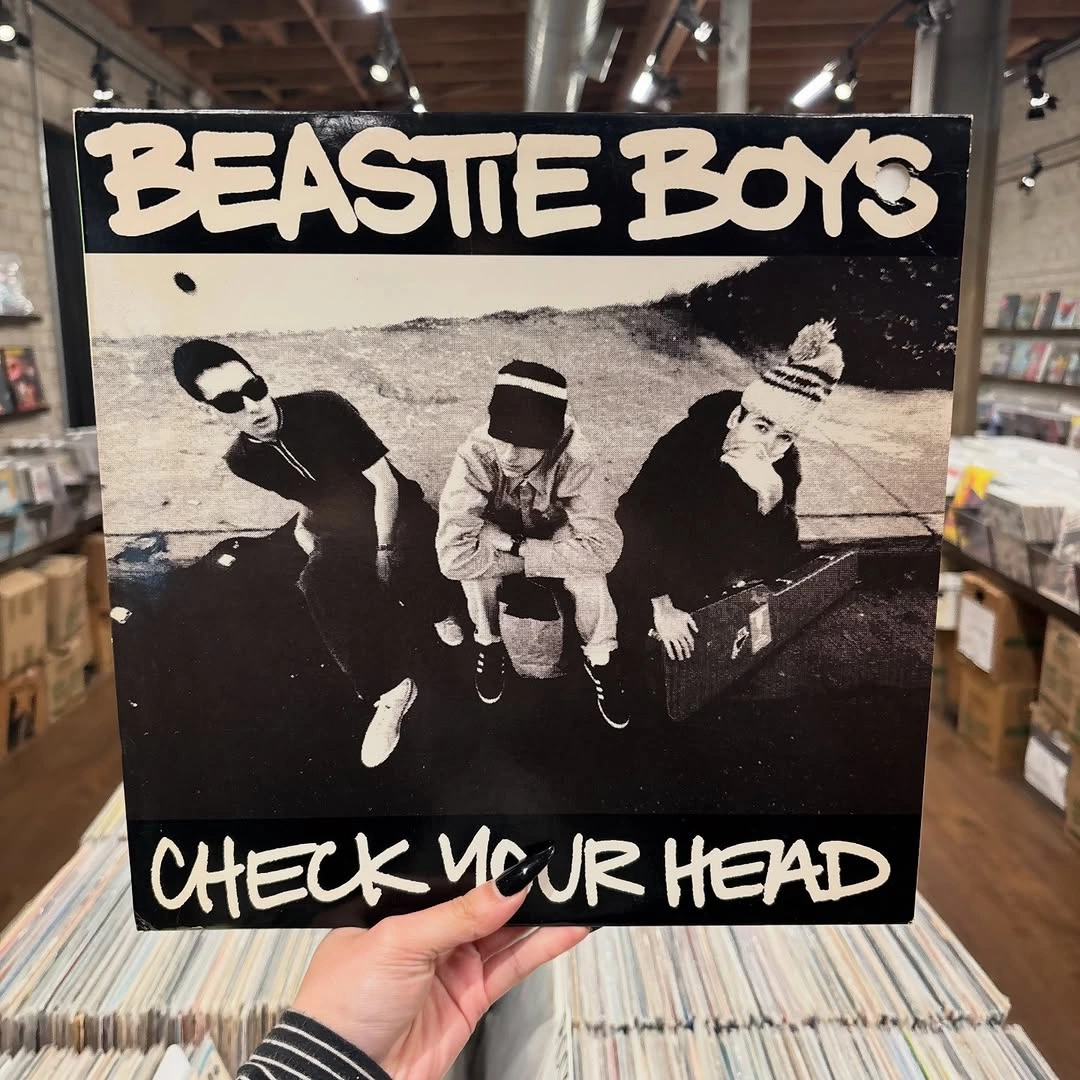
Every argument for physical music eventually comes back to one thing: a record is a finished object made by people who decided what it should be, and a stream is a file served to you by a system that decided what you should hear next. Both deliver the same songs. Almost nothing else about the two experiences is the same.
Start with the artwork, because it's the part digital lost first and most completely. An album jacket is a twelve-inch square — roughly 144 square inches of printed surface designed to be held at arm's length. A streaming thumbnail on a phone is a few hundred pixels. Blue Note's Reid Miles covers, Hipgnosis's surrealist photography for Pink Floyd and Led Zeppelin, Peter Saville's Factory sleeves, Barbara Wojirsch's ECM minimalism, Pen & Pixel's airbrushed excess for Southern rap — these were not decoration. They were the visual half of the release, and they were made at a scale that a thumbnail simply cannot carry. Gatefolds, die-cuts, inserts, printed inners, obi strips, foil, spot varnish: all of it exists because someone assumed you'd be holding it.
Then the liner notes. Who played bass. Which studio, which engineer, which dates. The producer's dedication, the thank-you list, the lyrics as the artist actually wrote them rather than as a crowdsourced site transcribed them. Liner notes are the primary documentation of recorded music history, and streaming services still, decades in, mostly don't carry them. Entire careers — session musicians, arrangers, engineers — are legible only from record sleeves. When you buy the physical copy you are buying the credits, and the credits are how you find the next thing you'll love.
Sequencing is the quiet one. An album is an argument with a beginning, a middle and an end, and the artist chose the order. A record enforces that order — you cannot skip casually, and the side break is a deliberate pause the artist built into the shape of the thing. Anyone who has heard side one of Marquee Moon, or the flip of Songs in the Key of Life, or the two halves of Low, knows the break is part of the composition. Shuffle and autoplay dissolve that structure entirely. Sixty percent of an album's tracks on a playlist is not the album.
The sound argument gets overstated by evangelists and dismissed too easily by sceptics, so here is the honest version. A well-pressed record played on a properly set-up turntable is not technically more accurate than a lossless digital file. What it is, reliably, is differently mastered. Vinyl cannot be brick-walled the way a track mastered for streaming loudness targets can — excessive limiting and out-of-phase bass make the stylus mistrack — so vinyl masters routinely retain more dynamic range than the digital master of the same album. That's why the record often sounds bigger and less fatiguing. Add the physical realities of the format — the gentle high-frequency roll-off, the harmonic character of the cutting chain, the low-level noise floor your brain reads as space — and you get a presentation that a lot of people simply prefer. Not more perfect. More alive.
The listening behaviour changes too, and this may be the biggest difference of all. Putting a record on is a decision. You pick it, sleeve it out, clean it, cue it, and then you have committed twenty minutes to that one artist. You sit down. You read the sleeve. When the side ends you get up, and in that moment you decide whether you want more. Streaming asks you for none of that, and gives you correspondingly less back. Everybody who has switched to records reports the same thing: they listen to fewer albums and know them far better.
For the artist, the maths is brutal and simple. A record sold at $30 returns the artist somewhere between $5 and $15 depending on whether they self-release, use a distributor, or sit on a label. One sale. On streaming, at roughly $0.003 to $0.005 per play, matching a single record sale takes somewhere between one and five thousand plays. An independent artist who sells 500 records has earned more than most independent artists earn from a million streams. Buying the record is, without exaggeration, one of the most direct financial acts of support available to a listener short of buying a ticket.
Records also give artists something streaming actively removes: a release event. A record has a date, a pressing, a run, a sleeve, a launch, a shop that stocks it. It exists in a place. Streaming releases dissolve into a feed within days and are functionally invisible a fortnight later. The physical object is how a small artist gets a shop counter, a local press write-up, a display in a window and a reason for someone to come to a show.
Ownership is not a small point either. A file you stream is a licence that can lapse. Albums are pulled from platforms for rights disputes, label collapses, estate arguments, contract expiries and political pressure — and versions get quietly swapped for remasters, censored edits or re-recordings without the listener being told. A record on your shelf is unaffected by all of it. It plays in a blackout, it plays without an account, and it plays in forty years.
Resale and durability follow from that. A well-cared-for record holds value and often gains it; a digital library is worth nothing to anybody and cannot be given to anyone. Records get passed down. A significant share of the best collections in the world started as somebody's father's crate.
There is a discovery argument that streaming genuinely can't match: the shop. Recommendation algorithms optimise for what you already like. A record store clerk who has clocked what's in your hands will hand you something sideways from it, and a shop's used bins will put a record in front of you that no system would ever surface because nobody has streamed it in a decade. Digging is a discovery method with serendipity built in. That's why a crate is still the best playlist generator ever made.
None of this requires being precious about it. Streaming is extraordinary for breadth, for the car, for the gym, for checking something before you commit. Most serious collectors use both — stream to audition, buy the ones that stick. The point isn't purity. The point is that when a record earns its way onto your shelf, you get the artwork, the credits, the artist's running order, a master made with room to breathe, an object that can't be revoked, and a payment that actually reaches the person who made it. That's not nostalgia. That's a better deal on every axis that matters.