The Movement to Vinyl Bars & Hi-Fi’s — What’s It All About?
How the Japanese kissaten tradition became a global movement of bars built around the record, the room, and the sound system.
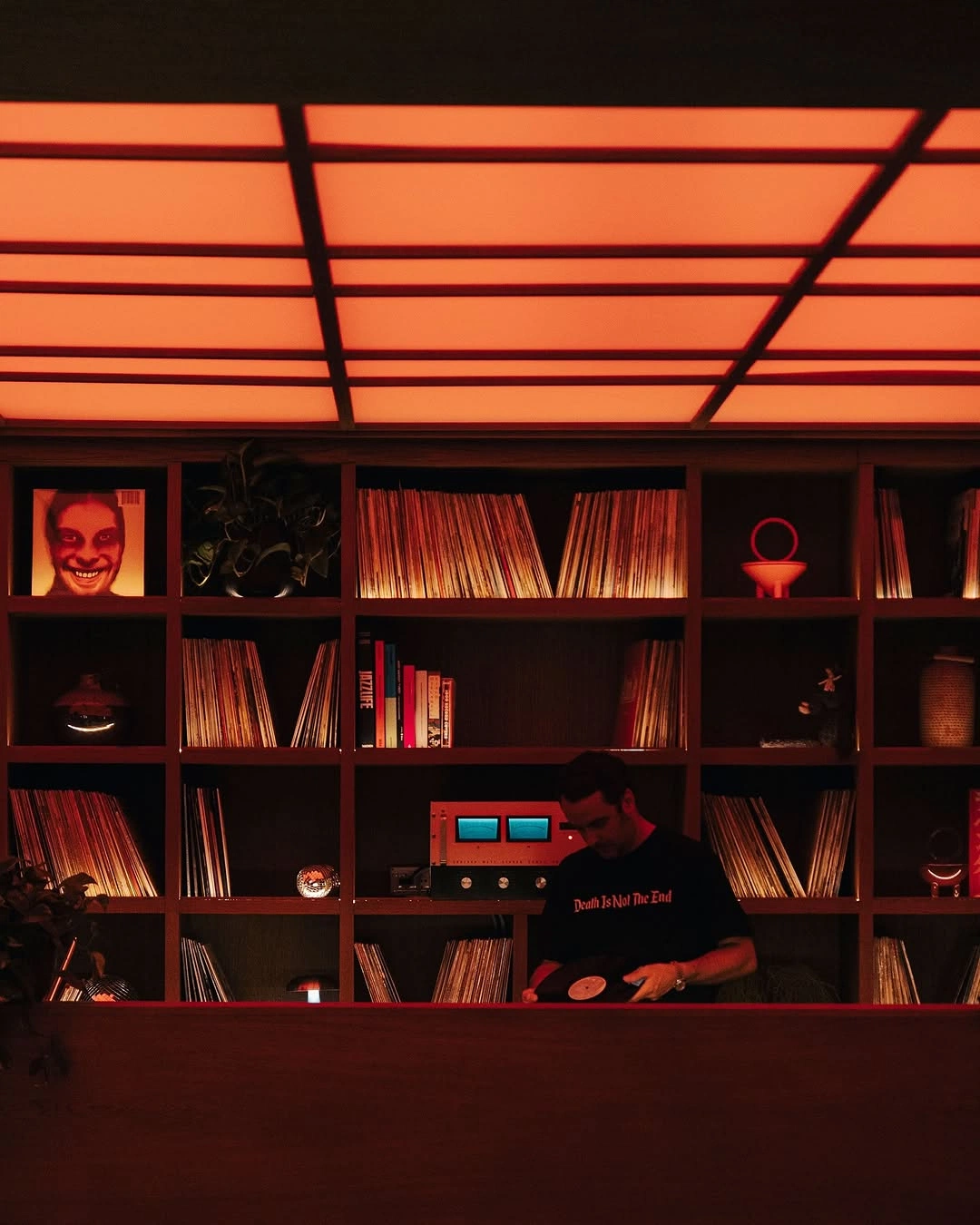
A vinyl bar isn’t just a bar that plays music. It’s a room engineered around the music — speakers placed for the seating, acoustic treatment on the walls, an analogue front-end (turntable, valve amps, dedicated phono stage), and a selector or host who plays records full-length, side by side, without talking over them.
The tradition started in post-war Japan with kissaten and jazz kissa — small cafés where the owner had spent everything on the hi-fi and a wall of LPs, and customers came to sit quietly and listen. Some of these rooms have been running, the same speakers in the same corners, for fifty or sixty years.
Over the last decade the format has gone global. Spiritland in London, Public Records in New York, In Sheep’s Clothing in LA, Tokio in Melbourne — each one a different take, but all sharing the same DNA: vinyl-first, sound-system led, food and drinks built around the room rather than the other way around.
The movement is partly a rejection of the playlist era. When music is infinite, free and algorithmic, sitting in a beautiful room with great speakers while a human being plays a record start-to-finish becomes radical. It slows you down. It rewards attention. And it puts the record — the object, the artist’s sequencing, the engineer’s mastering — back at the centre.
For diggers it’s also a discovery engine. A good selector at a good bar will play things you’d never find on your own, and tell you what it is when you ask.
To understand the room you have to understand the system. The Japanese template that everything else descends from was built around a very specific hardware religion — vintage Altec, JBL and Tannoy horn-loaded speakers driven by valve amplification, usually low-wattage single-ended triode designs from the likes of Sun Audio, Audio Note or hand-built Japanese one-offs. Sources are almost always all-analogue: an Ortofon SPU or Koetsu cartridge into a dedicated moving-coil step-up transformer, then a valve phono stage, then the amp. The whole chain is optimised for tone and midrange presence rather than measurable frequency extension, and the room itself is tuned to it. That is why a great jazz kissa can make a 1959 Blue Note pressing sound like the musicians are in the corner.
The godfathers of the Tokyo scene are still trading. Lion in Shibuya has been running since 1926 and forbids conversation above a whisper. Jazz Blues Soul Bar Bright Brown in Kichijoji and Jazz Spot Dug (opened by photographer Yasuhiro Nakasone in 1961, still in Shinjuku) are pilgrimages in their own right. Bar Martha in Ebisu is the modern reference — a wall of five thousand LPs, a request-based selection policy, and one of the best-sounding rooms in Asia. Track Nakameguro, Grandfather's in Shibuya and JBS (Jazz, Blues, Soul) in Shibuya round out the shortlist.
Outside Japan the format has splintered into three broad schools. The first is faithful hi-fi — Spiritland in London, Bar Shiru in Oakland, In Sheep's Clothing in LA, Public Records in Brooklyn, Potato Head's music room in Jakarta — where the rig is the point and the food is designed around not competing with it. The second is the sound-system bar, where the DNA is Jamaican rather than Japanese: Brilliant Corners in Dalston, Giant Steps in Berlin, Le Bar Bar in Paris, Kif in Marseille, all built around a custom-built rig capable of proper sub-bass. The third is the vinyl-forward wine bar or restaurant — Eavesdrop in Melbourne, Bambara in Barcelona, Nick's on Broadway in Providence — where the system is a serious upgrade on the usual restaurant PA but the room still primarily sells dinner.
The pandemic-era boom is real but the economics are brutal. A proper hi-fi bar costs three to five times more to build than a normal bar of the same size, and the returns are lower — bar seating is limited by the sight-lines and the sweet-spot of the speakers, the ticket per head is typically a wine or a cocktail rather than food, and the staff cost is higher because you need a selector on shift alongside the bar. Most of the ones that have opened globally since 2020 are run by people who are essentially subsidising a record collection with hospitality revenue. That is why the good ones tend to be tied to a label, a store or a promoter — Music From Memory's Amsterdam nights, Rush Hour's rooms, Boiler Room offshoots, Mr Bongo's occasional pop-ups — rather than pure standalone businesses.
The bar-as-label pipeline is worth watching. Selectors who started as vinyl bar residents — Lexx and Fett Burger in the Nordic scene, Volcov (Neroli) in Manchester, Sadar Bahar's Soul in the Hole in Chicago, Rainer Trüby in Freiburg, Hunee's Rush Hour Amsterdam nights — routinely turn what they play at the bar into reissue programmes. A large slice of the ambient, Balearic and jazz-not-jazz reissue market of the past decade has been essentially crate-notes from a specific hi-fi room, pressed to vinyl and sold back to the audience who first heard it in that room.
For the traveller, a working method: book the bar for the evening after your record store day, arrive early, take a seat where you can see the speakers rather than the bar, order a drink and shut up. Do not request tracks in the first hour. Buy a copy of anything you Shazam later — the selector will notice, and the second visit will get you tipped off to the shop or reissue label the record actually came from. That is the whole social contract of the vinyl bar in one sentence.
A word on the room. The best-sounding vinyl bars share three physical features: no parallel walls behind the speakers (the back wall is either broken with panels or angled), heavy soft furnishing on at least one side to kill flutter echo, and no glass in the direct reflection path between speaker and seat. If you walk into a 'listening bar' that is all polished concrete and glass, you are in a restaurant that owns a turntable. That is not the same thing.
The category is also generating its own critical vocabulary. Selectors talk about programming a set the way a chef talks about a tasting menu — a first course of quiet ambient or spiritual jazz to reset the room, a mid-tempo body of soul, funk or Brazilian music once people settle in, a peak section of disco or boogie if the room supports it, then a wind-down of dub, ballads or Japanese ambient. A good vinyl bar night is composed, not shuffled. That composition is what people come back for.