Italo & Balearic Revival — How the Sound of 1980s Ibiza Came Back
Nu Genea, the Napoli scene, Best Record Italy, and the new wave of nu-disco producers reviving the sound of Cosmic, Italo and Balearic on vinyl.
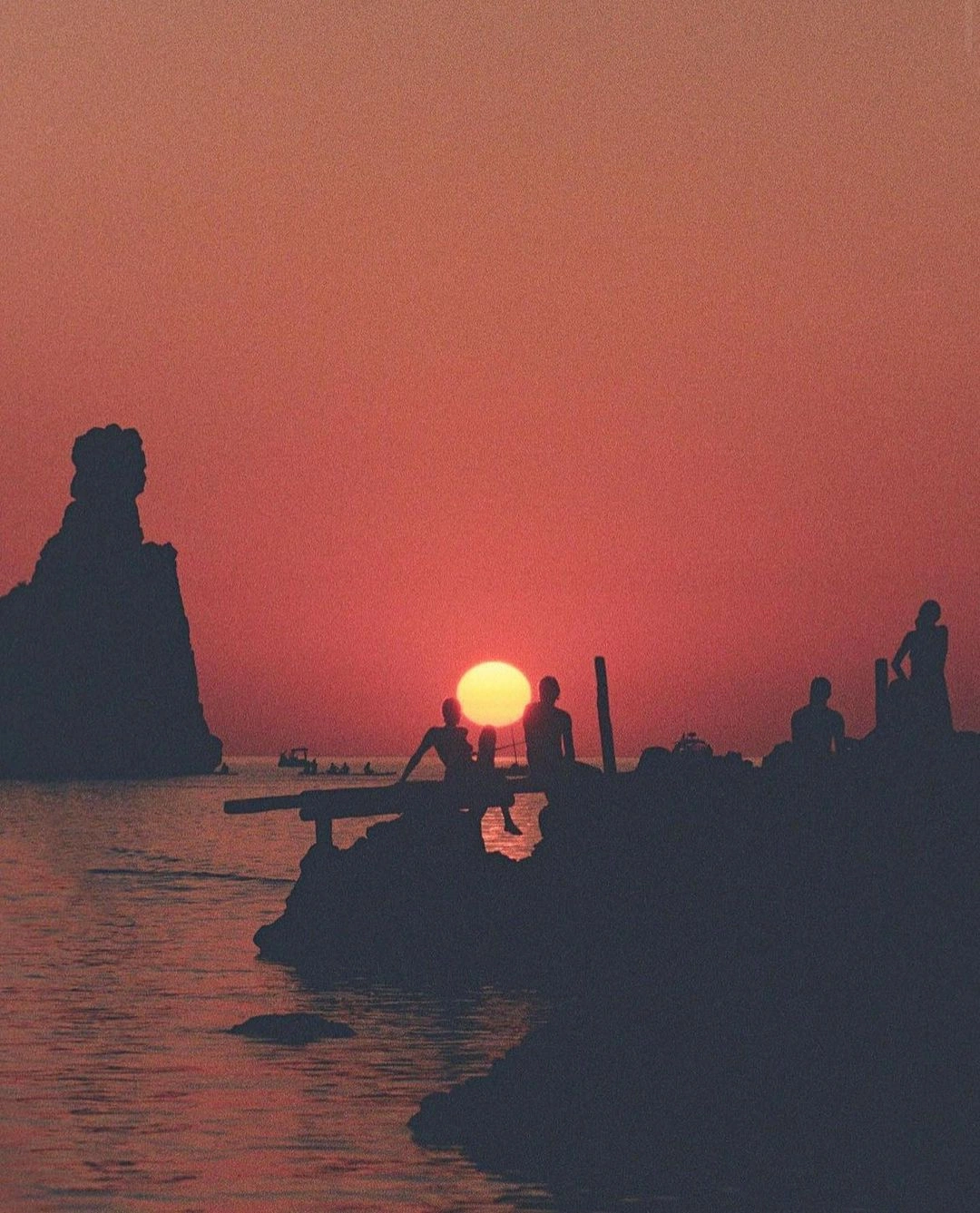
For most of the 2000s, Italo disco and the Balearic sound of 1980s Ibiza were the property of a small circle of DJs — Harvey, Baldelli, Trevor Jackson, Prins Thomas — quietly buying up the original 12 inches at Italian and Spanish record fairs. Ten years later, they're the reference points for one of the most exciting scenes in dance music, and the vinyl market has followed.
The engine of the revival is Napoli. Nu Genea (formerly Nu Guinea) opened the door with 'Nuova Napoli' in 2018 and 'Bar Mediterraneo' in 2022 — records that sound like a Neapolitan wedding band who spent the 1970s listening to Studio 54. They sold out on vinyl on release, immediately went for double on the resale market, and pointed a whole generation of listeners at what Naples had been doing since the days of Pino Daniele and James Senese.
Around Nu Genea the Napoli-Rome-Milan corridor has produced a run of artists worth chasing on wax: Whodamanny, Mystic Jungle, Fitness (all part of the Periodica Records family), San Pellegrino Pellegrino's disco edits, and the wider Early Sounds / NG Records ecosystem. If you like one, you'll like the lot.
The reissue infrastructure has done just as much work. Best Record Italy has systematically repressed the Cosmic and Afro-Cosmic canon — the wild, slowed-down, effects-drenched sound Baldelli and Loda played at Cosmic Club in the early '80s. Archeo Recordings, Mondo Groove, Musica Per Voi, Groovin Recordings and Spittle have kept the deeper Italo library and library-music catalogue in print. Not the obvious hits — the weird stuff, the private pressings, the library records that only ever existed as promos.
On the crossover side, nu-disco producers have taken the DNA and pushed it into modern club records. DJ Harvey's Locussolus project, Mark Barrott, Prins Thomas, Coyote, Daniel Baldelli's own recent output, Hardway Bros, Dave Mathmos, and edit-scene lifers like Dan Tyler (Idjut Boys), Ilija Rudman and Massimiliano Pagliara all keep one foot in Balearic. The 'sunset at Café del Mar' sound is now a global genre with a supply chain.
If you're starting a Balearic shelf: Nu Genea's two LPs, anything on Best Record Italy's Cosmic series, the International Feel back catalogue, Music From Memory's reissue programme (start with Gigi Masin and Joe Hisaishi's 'Curved Music'), and the original Balearic Beats compilations that Trevor Fung and Paul Oakenfold made in 1988 to bottle what they'd heard at Amnesia. From there, the rabbit hole is bottomless.
The historical geography matters. 'Balearic' is not a genre in the technical sense — it's a selection philosophy invented by DJ Alfredo Fiorito at Amnesia in Ibiza in the mid-1980s, when the club was still open-air. Alfredo would play Chris Rea, Thrashing Doves, Woodentops, Prince, Cyndi Lauper's 'Girls Just Wanna Have Fun', George Kranz's 'Din Daa Daa', Fleetwood Mac's 'Big Love' and Peter Gabriel's 'Sledgehammer' next to Italian import 12 inches and early house, and the point was tempo and feel — 100 to 122 BPM, warm, harmonically rich, unafraid of a guitar solo or a mid-tempo ballad. When Trevor Fung and Paul Oakenfold flew four London DJs (Danny Rampling, Nicky Holloway, Johnny Walker, Oakenfold himself) out for Oakenfold's birthday in August 1987, they went home and started Shoom, Spectrum and The Trip — and UK acid house, the entire second Summer of Love, is directly downstream of that week at Amnesia.
Italo disco proper is a separate but overlapping animal. It runs roughly 1978 to 1988, mostly cut by small labels in Milan, Bologna, Rimini and Naples — Discomagic, Il Discotto, Fulltime, Full Time, Memory, X-Energy — and it is built on cheap Roland gear, Italian-accented English vocals, and a very specific melodic sensibility inherited from Ennio Morricone and Italian film soundtracks. Producers to know: Alexander Robotnick ('Problèmes d'Amour'), Klein + M.B.O. ('Dirty Talk'), Kano ('I'm Ready'), Charlie ('Spacer Woman'), Doctor's Cat, Ken Laszlo, Sun La Shan, Gaz Nevada, N.O.I.A., and the entire Baldelli-adjacent Cosmic Club scene at Lago di Garda. The prices on OG Italian 12s tracked upward hard between 2018 and 2023 and have only softened slightly since.
The Cosmic Club story is worth telling because it is the missing link between Italo and modern nu-disco. Daniele Baldelli was resident at Cosmic in Lazise, on Lake Garda, from 1979 to 1984. He played records at the wrong speed on purpose — 33s at 45, 45s at 33 — layered them, filtered them, ran them through effects, and built four-hour sets out of African, Brazilian, Krautrock, dub, Italo, EBM and library music. The sound was called 'afro-cosmic' or just 'cosmic', and Baldelli's original mixtapes (the C60 and C90 cassettes hand-labelled with tracklists) are now serious collectors' items in their own right. Best Record Italy's Cosmic series and Archeo's reissue programme have systematically returned the source material to print; the Baldelli / TBC 'Cosmic Temple' compilations are a good primer.
The Music From Memory story is inseparable from the Balearic revival. Founded in Amsterdam in 2013 by Jamie Tiller (RIP), Tako Reyenga and Abel Nagengast — all of whom worked at Red Light Records in Amsterdam — the label has built the most influential reissue programme in Balearic-adjacent music of the last decade. Their work with Gigi Masin, Suso Sáiz, Joan Bibiloni, Roberto Musci, Michal Turtle and the vast 'Outro Tempo' Brazilian ambient series has essentially defined what mid-2010s Balearic listeners consider canonical. Red Light Records itself in Amsterdam remains one of the best rooms in Europe to hear this stuff played on a good system.
The Ibiza vinyl scene has quietly recovered from a decade of EDM. Solomun's Diynamic events, DJ Harvey's Pikes residencies, Zenker Brothers' outdoor parties, Ellum Audio's Cova Santa nights, and the return of vinyl-first bookings at Underground Ibiza, Hostal La Torre and Cova Santa have all pushed the island back toward its 1987 Alfredo-era DNA. Record Sábado, Ibiza's monthly record fair, and Bombay Records in Ibiza Town are the places to buy on-island. Do not fly out with the intention of finding OG 1980s Italian imports at bargain prices — that ship sailed in 2015 — but the reissue and current-scene stock is genuinely deep.
The Naples scene deserves more space than one paragraph. The city has been a musical laboratory for centuries — the Neapolitan song tradition, the sceneggiata, the Napoli 'progressive' rock of the 1970s (Napoli Centrale, Osanna, Napolisdanza), Pino Daniele's fusion of Neapolitan folk with jazz and funk — and the current Periodica / Early Sounds / NG Records generation is consciously extending that lineage. If you like Nu Genea, work backward through Pino Daniele ('Terra Mia', 'Nero a Metà'), Napoli Centrale (James Senese's saxophone work with Pino), Tullio De Piscopo's disco singles, and Enzo Avitabile's early records. That is the genealogy the current scene is drawing on, and the OGs are still cheap enough in Neapolitan used shops to build a serious shelf without breaking anything.
For the digger visiting Italy, a working circuit: Milan (Serendeepity, Peter Pan Records, Best Record's own shopfront when open, the monthly East Market fair), Bologna (Disco Più, Semm Music Store), Rome (Millerecords, Radiation Records), Napoli (Ostello Bello's flea markets and the shops around Via San Sebastiano), then a ferry to Palermo for the Sicilian used-jazz and Italian film-soundtrack scene. Add the Balearic circuit — Ibiza, then Barcelona (Discos Paradiso, Wah Wah, Ultra-Local) — and you have three weeks that will reset your understanding of what European dance music actually is.