
Dub Reggae — King Tubby, Lee Perry, Scientist & Why the Version Is the Song
How Jamaican engineers invented the remix, the drop, and the modern studio — and why original Jamaican pressings from Studio One, Treasure Isle and the Black Ark are the deepest well in record collecting.
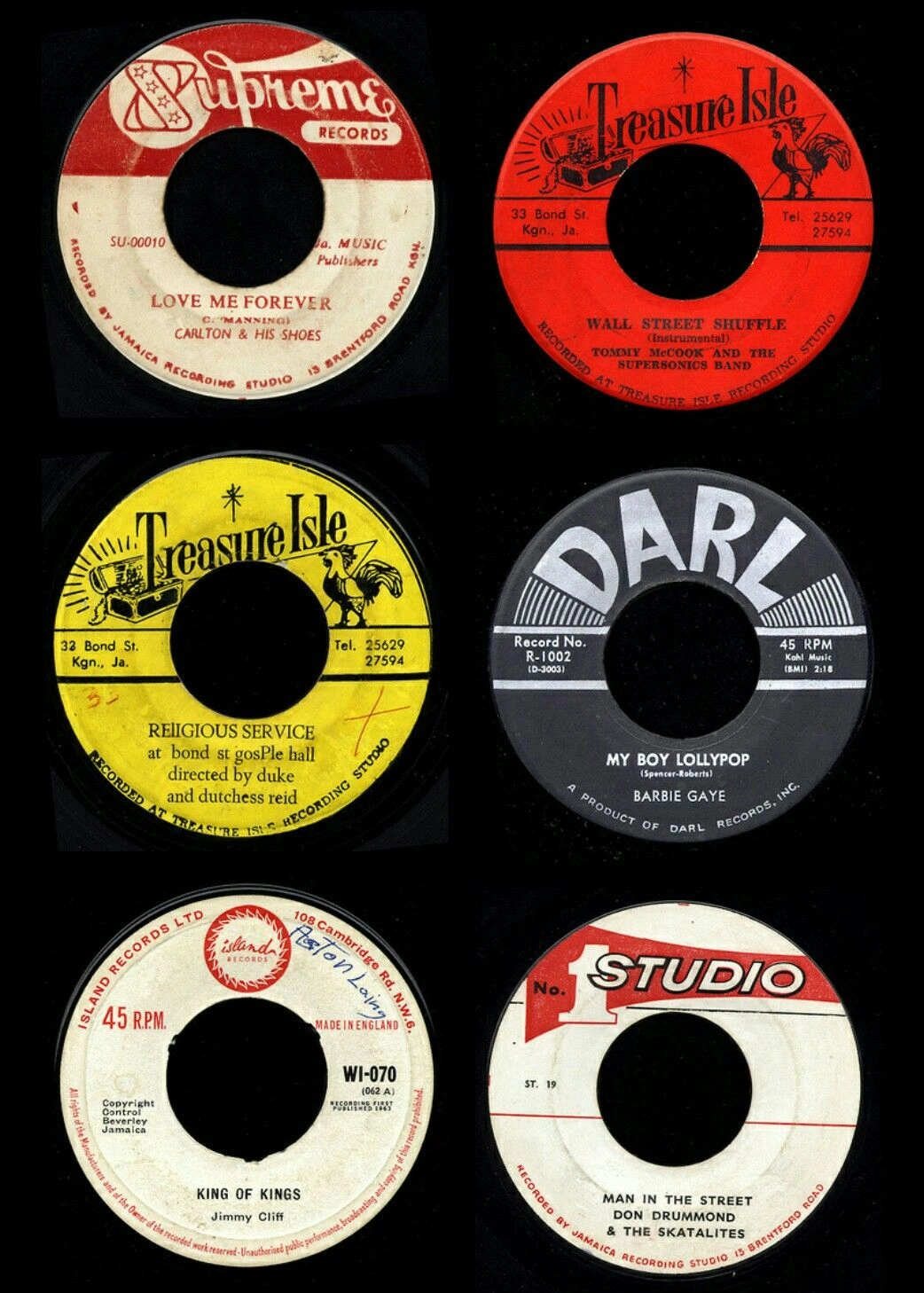
Dub is what happened when Jamaican engineers realised the B-side was more interesting than the A. In the late 1960s and early 1970s, King Tubby, Errol Thompson, Lee 'Scratch' Perry and later Scientist and Prince Jammy started taking existing reggae recordings, dropping the vocals in and out, drenching everything in spring reverb and tape delay, boosting the low end, and cutting the results as instrumental 'versions' on the B-side of 7 inch singles. Almost every modern production idea — the remix, the dubplate, the drop, the loop, sidechain, sub-bass culture — was invented on Jamaican tape between 1972 and 1978.
King Tubby is the architect. His four-track studio at 18 Dromilly Avenue in Kingston is where dub, in the modern sense, was engineered into existence. 'King Tubby Meets Rockers Uptown' (with Augustus Pablo, 1976) is still the single greatest dub LP ever pressed, and everything on the Yabby You, Roots Radics and Prince Jammy production axis flows from Tubby's mixing desk. Scientist, his apprentice, took the sound heavier and weirder — 'Scientist Rids the World of the Evil Curse of the Vampires', 'Scientist Meets the Space Invaders' — and the sleeves alone are worth the price of admission.
Lee Perry is the poet. The Black Ark studio in Washington Gardens, run between roughly 1973 and 1979, produced 'Super Ape', Max Romeo's 'War Ina Babylon', Junior Murvin's 'Police & Thieves', The Congos' 'Heart of the Congos', and dozens of 7 inch versions that are still being reissued forty years later. Perry mixed by feel, layered tape until the machines groaned, and burned the studio to the ground when he was done. Original Black Ark pressings — Upsetter, Justice League, Black Art — are among the most sought-after records on earth in clean condition.
The foundation labels are the deep end of the market. Studio One (Clement 'Coxsone' Dodd), Treasure Isle (Duke Reid), Trojan, Island's early Jamaican imports, Wackies (Lloyd 'Bullwackie' Barnes in the Bronx), Greensleeves early catalogue, and the endless small-run Jamaican pre-releases and blank-label dubplates. Clean Studio One 7 inches from 1968–1974 have quietly become one of the tightest collector markets in music — no reissue matches the low-end of a Jamaican original, and there aren't many left.
To start a dub shelf: Augustus Pablo 'King Tubby Meets Rockers Uptown', Lee Perry 'Super Ape', Scientist 'Rids the World of the Evil Curse of the Vampires', King Tubby 'Dub From the Roots', Prince Jammy 'Kamikazi Dub', and the Blood & Fire and Pressure Sounds reissue catalogues (both label programmes are almost entirely essential). From there, follow the engineers rather than the artists — that's the dub method.
The version-side story is the whole reason dub exists at all. In 1968 Ruddy Redwood, a Kingston sound system operator, asked engineer Byron Smith at Duke Reid's Treasure Isle studio for an instrumental cut of a Paragons vocal ('On the Beach') to test as a B-side. When the record was played that night at Redwood's sound system, the crowd sang the vocal themselves over the instrumental, went wild for it, and Redwood realised the 'version' was a completely new product. From that accidental cut in 1968 to King Tubby's early instrumental cuts on rival sound systems by 1970, the entire logic of dance music — the remix, the extended mix, the DJ tool — was worked out on Jamaican tape in about eighteen months.
The 'toasting' tradition that grew alongside dub is the direct pre-history of rap. U-Roy, King Stitt and Count Machuki were rhyming over instrumental versions on Jamaican sound systems from the late 1960s. When Kingston-born DJ Kool Herc started his Bronx block parties in 1973 he brought that entire methodology — twin turntables, a mixer, isolate the break, MC over the top — with him from Jamaica. Every rap record ever made is downstream of that transfer of technology, and any serious hip hop shelf should have a section for U-Roy, I-Roy, Dennis Alcapone, Big Youth, Prince Far I, Yellowman and Josey Wales alongside it.
The Kingston studio geography of the 1970s is worth mapping. Randy's Studio 17 at 17 North Parade (run by the Chin family, later Randy's became VP Records in Queens) is where the Wailers, Big Youth and Lee Perry all cut foundational sides. Harry J's Studio in Roosevelt Avenue produced the entire early Bob Marley catalogue post-Upsetter. Channel One in Maxfield Avenue (opened by the Hoo Kim brothers in 1972) became the home of the Roots Radics and the Revolutionaries rhythm sections, and cut 'Two Sevens Clash' by Culture, most of Sly & Robbie's 1970s productions, and the entire rockers-era sound. Aquarius in Halfway Tree, Dynamic Sounds, and later Bob Marley's own Tuff Gong studio at 56 Hope Road round out the map.
Sly & Robbie — drummer Sly Dunbar and bassist Robbie Shakespeare — are the rhythm section that quietly played on more of the reggae you love than anyone will ever fully catalogue. They anchored Channel One, ran the Taxi label, played on Peter Tosh, Black Uhuru, Grace Jones's Compass Point trilogy, Bob Dylan's 'Infidels', Herbie Hancock, Serge Gainsbourg's 'Aux Armes Et Cætera', and dozens of Sly & Robbie-produced dub LPs on Mango, Island and Taxi. Robbie Shakespeare died in 2021; the bass sound he built with Sly is one of the two or three most influential rhythm-section signatures in recorded music.
The UK dub lineage is the other half of the story. From Jah Shaka's south London sound system through Adrian Sherwood's On-U Sound (Dub Syndicate, African Head Charge, New Age Steppers, Prince Far I collaborations), Mad Professor's Ariwa in Peckham (which mixed Massive Attack's 'No Protection' and continues to press dub weekly), the Bristol axis (Smith & Mighty, Rob Smith / RSD, Peverelist, Kahn & Neek), the whole UK steppers and dub-techno crossover scene of the 2000s, and the current wave of digital-dub producers (O.B.F., Alpha Steppa, Iration Steppas, Zenzile) — dub in the UK has been a continuous, self-renewing tradition for fifty years, and the current 12 inch scene is genuinely one of the healthiest small-label ecosystems in dance music.
Digidub and the digital-era dancehall shift matter more than most reggae histories admit. In 1985, Prince Jammy and King Jammy at his King Tubby-trained studio in Waterhouse cut Wayne Smith's 'Under Mi Sleng Teng' on a Casio MT-40 preset. That single record ended the reggae session-musician era overnight and started the digital dancehall era that runs through Bobby Digital, Steely & Clevie, Sly & Robbie's later Taxi digital productions, and the entire modern dancehall economy. Original 1985–1990 Jammy's, Digital B, Steely & Clevie and Penthouse 7 inches are among the most fun and most undervalued records in the entire reggae market — you can still build a serious digital-dancehall shelf on original Jamaican pressings for less than the cost of one clean Studio One 45.
For the collector: Jamaican pressings from 1968–1978 are physically the most challenging vinyl market in the world. Heat, humidity, small pressing runs on variable-quality vinyl (Federal Records and Dynamic Sounds pressed most of what came out of Jamaica in that era), and heavy sound-system use mean that VG+ is realistically the top grade you will ever find on a played 45. NM Jamaican originals essentially only exist for records that were shipped as promos and never played. Blank-label pre-releases and one-off dubplates — cut for a specific sound system, often unlabelled — are the deepest and most opaque corner of the market; unless you already know the rhythm and the era, buy from a specialist (Dub Store Japan, Deadly Dragon in NYC, Small Axe in Berlin, Reggae Fever in Rotterdam) rather than blind.
The reissue landscape has quietly become one of the best in music. Blood & Fire (Steve Barrow's now-defunct but essential label), Pressure Sounds (still active, Adrian Sherwood-adjacent), Dub Store Records in Japan (systematically working through Studio One, Treasure Isle and the King Tubby archive), Soul Jazz's 100% Dynamite / Studio One series, VP's own reissue programme, and the recent Roots Radics and Wackies programmes on Basic Channel's Rhythm & Sound / Wackies imprint are the sensible entry points for anyone not chasing OGs. Buy the licensed reissues, save your money for the specific OGs you can't live without, and follow the engineers.