Diggers’ Pet Peeves — Things That Customers Say Improve a Dig
The small things stores can do that turn a good dig into a great one — straight from the diggers themselves.
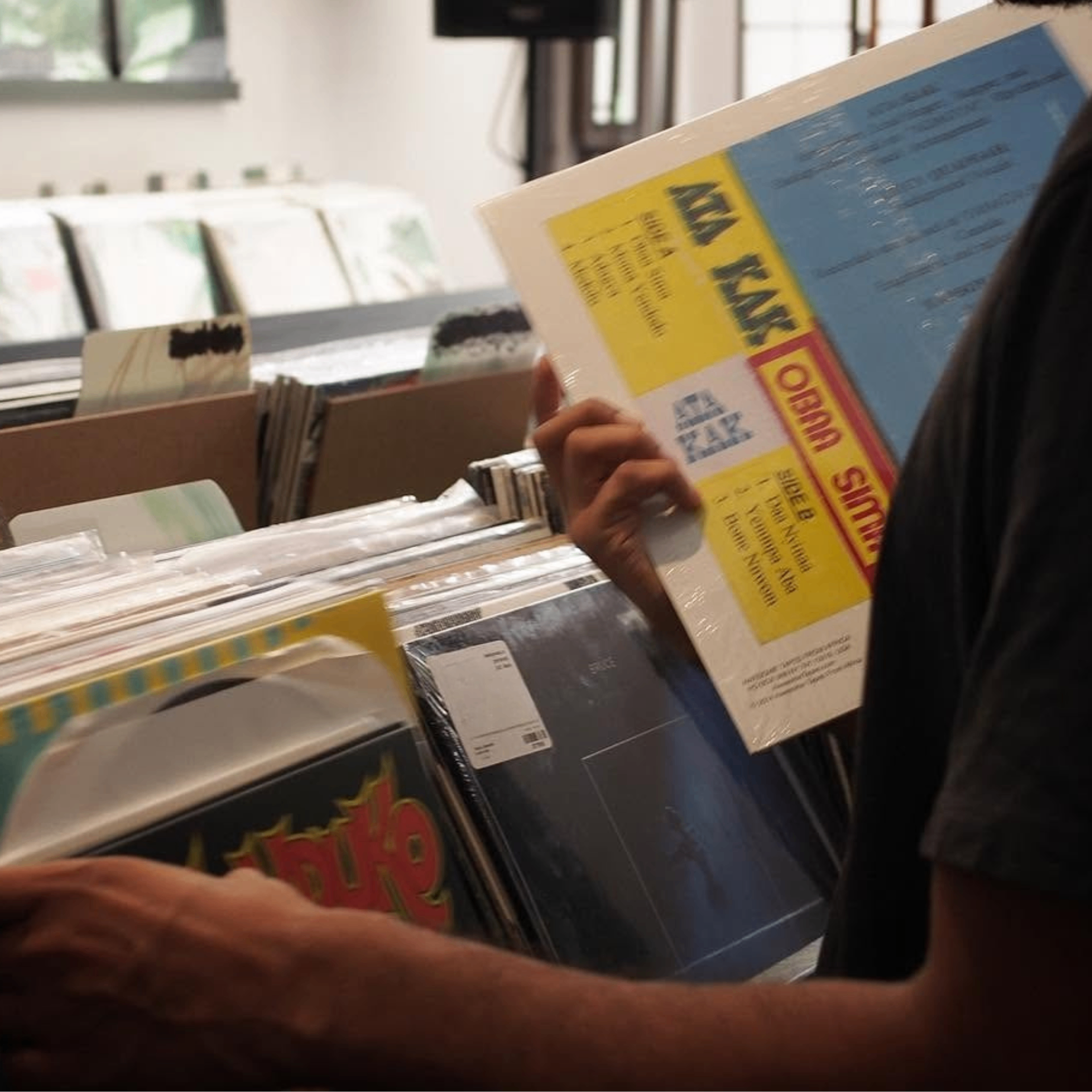
Ask any serious digger what makes a record store actually good to spend time in, and the answers are remarkably consistent. It’s almost never about having the rarest stock. It’s about the experience of being in the room.
Clear, accurate sections. Genre dividers that match what’s actually in them. ‘Soul / Funk’ that isn’t 40% smooth jazz. ‘Electronic’ broken down into something more useful than one giant bin.
A listening station that actually works. A turntable, a working stylus, decent headphones, and ideally a member of staff happy to drop the needle on a specific track when asked.
Pricing on the sleeve, not on the system. Diggers will spend more in a store where they can flip a record over, see the price immediately, and decide. Having to queue at the counter to find out kills momentum.
Decent lighting, decent air, and somewhere to put a bag down. Most diggers will spend an hour at minimum once they’re in. A small thing like a hook or a shelf for jackets gets quietly noticed.
Stock rotation. New arrivals shelved fast, clearly flagged, and not the same crates you saw three months ago. Even a modest store can feel exciting if it moves.
And finally, music in the room that isn’t a Spotify playlist. Hearing the store play an actual record — at proper volume, with intent — is what tells you the people behind the counter are diggers too.
Sub-genre dividers are the single biggest quality signal in a used store. Any shop can put up 'ROCK' and 'JAZZ'. A shop that separates 'Spiritual Jazz', 'Modal', 'ECM', 'Latin Jazz' and 'Fusion' — or 'Detroit / Chicago House', 'Deep House', 'Minimal', 'UK Garage', 'Jungle / DnB' — is telling you the buyer actually knows what came through the door. Diggers will happily walk past a bigger, cheaper, worse-organised store to spend more money in the one that pre-filters for them.
Condition grading that matches reality. If a store uses the Goldmine grading standard (M, NM, VG+, VG, G+, G, F, P), applies it honestly, and prices accordingly, that trust compounds fast. Overgrading kills a store's reputation with regulars within weeks. A quick industry rule: NM should mean 'looks and plays as if it left the plant last week', VG+ should mean 'a couple of light hairlines, silent play', VG should mean 'audible surface noise between tracks but no skips'. Anything below VG needs to be priced like the play copy it is.
A cleaning setup on-site. Any store above a modest size that owns a Loricraft, Degritter, Keith Monks, or even a Pro-Ject VC-S vacuum cleaner and will clean a used record on request — for free or for a small fee — will earn the used-market business of every serious collector in a fifty-mile radius. It is one of the cheapest reputational upgrades a store can make.
Public want-lists. The stores diggers love most are the ones with a whiteboard, a notebook or a shared Google doc where regulars can leave 'if you get X, hold it for me and I'll pay Y'. It transfers risk from the store (which no longer has to guess if a $200 record will sell) to the customer (who gets first refusal on a record they already want). Almost nobody does this well; the ones that do have a queue of regulars.
Turn the used counter around. A digger's second-worst experience is bringing in a collection and being made to feel like a nuisance. The stores that win the local buying market treat every walk-in seller as a potential future regular — a bottle of water, a quick honest look, a written offer, and a 'no' delivered kindly if the collection isn't right. That seller tells five friends, and one of them has the collection you actually want.
Coffee, water, and a place to sit. Digging is physical work. Ninety minutes crouched over a low crate is genuinely tiring. A single chair by the window and a jug of water on the counter costs almost nothing and doubles average visit length. Little Axe in Portland, Amoeba in Los Angeles, Phonica in London and Oye in Berlin all quietly do this and are consistently the ones diggers plan trips around.
A working online presence that does not undermine the shop. Stores that photograph their new used arrivals, post them to Instagram once a week, and let regulars claim by DM before the record hits the floor create a genuine event around every delivery. Stores that list everything on Discogs at maximum international price and hide it from the floor destroy the walk-in experience. The best ones do the first and refuse to do the second.
Finally, dealer relationships you can feel. When a store has close relationships with two or three specific overseas dealers — a Japanese jazz specialist, a German techno source, a UK reggae broker — the character of the stock is unmistakeable within one visit. That is the single most underrated thing a store can invest in, and the single hardest for a competitor to copy. Every great record store on earth is, underneath, a relationship business with three phone numbers on speed dial.