Afrobeat on Vinyl — The Most Influential Movement in Modern Music
How Fela Kuti, Tony Allen, Manu Dibango and Ebo Taylor built a sound that reshaped funk, jazz, hip hop and dance music — and why the original pressings still matter.
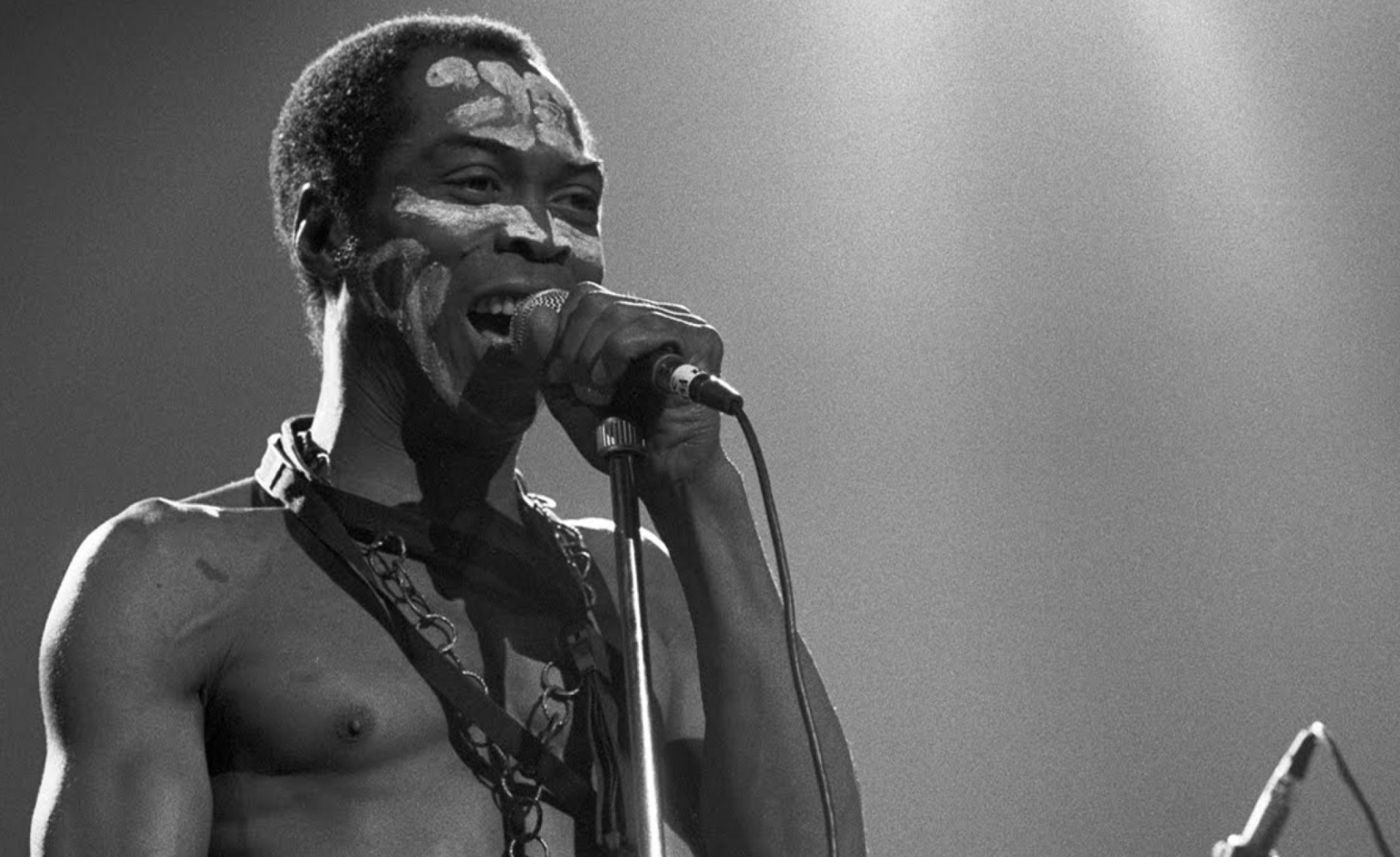
Afrobeat is arguably the most influential musical movement of the last sixty years, and one of the few that was as politically radical as it was musically revolutionary. Born in late-1960s Lagos out of the collision between Yoruba percussion, highlife, jazz and James Brown-style funk, it was engineered by Fela Kuti and his drummer Tony Allen into something no other genre has matched — long-form, hypnotic, horn-driven, and unafraid of a twenty-minute groove.
Fela Kuti's records — 'Zombie', 'Expensive Shit', 'Water No Get Enemy', 'Sorrow Tears and Blood' — weren't album tracks so much as manifestos. Each one was aimed directly at the Nigerian military government of the day. He was beaten, jailed, and had his commune burned down. The music kept coming. That's the political weight afrobeat carries that almost no other genre can claim: it named names, it paid for it, and it never softened.
Musically, Tony Allen is the hinge. The pattern he built underneath Fela — the broken, rolling, endlessly propulsive drum kit — became the DNA of modern popular music. Brian Eno famously called him 'perhaps the greatest drummer who has ever lived'. You can hear him in every producer who came after: J Dilla, Madlib, Four Tet, Floating Points, half of Blue Note's current roster.
Around Fela and Allen sits a wider cast that deserves the same shelf space. Manu Dibango's 'Soul Makossa' (1972) is not only one of the great Cameroonian records — its horn hook was lifted by Michael Jackson on 'Wanna Be Startin' Somethin'' and settled in court decades later. Ebo Taylor, still recording today into his nineties, is the missing link between highlife and afrobeat and one of the most sampled artists in modern hip hop and house. Look up Orlando Julius, Geraldo Pino, William Onyeabor, Marijata, and Pat Thomas from Ghana while you're at it.
Collectors chase the originals for good reason. Nigerian pressings on labels like EMI Nigeria, Coconut, Decca West Africa, and Fela's own Kalakuta and Afrodisia imprints have a heat and low-end you don't get from later reissues, and West African stock copies almost never left the continent in large numbers. A clean OG Fela LP that used to cost pocket money in the '90s is now a serious record.
The good news for anyone starting: the reissue programs are excellent. Knitting Factory has systematically restored Fela's catalogue, Analog Africa and Soundway have opened up the wider West African scene, and Comet Records keeps unearthing the deeper cuts. Start with 'Expensive Shit', 'Zombie', 'Afro Disco Beat' by Tony Allen, and 'Life Stories' by Ebo Taylor. Then follow the drummers.
The Ghanaian side of the story is the missing chapter in most Western afrobeat conversations. Highlife — the guitar-band tradition that came out of the Gold Coast in the 1920s and evolved through E.T. Mensah's Tempos Band, the Ramblers Dance Band and Uhuru Dance Band — is the foundation Fela himself was reacting to. When Fela renamed his sound 'afrobeat' in the late 1960s he was distancing himself from highlife's polite dance-band respectability, but the harmonic and rhythmic DNA is the same. Ebo Taylor, Pat Thomas, Gyedu-Blay Ambolley and the Sweet Talks were doing something parallel and, arguably, funkier — heavier on the electric guitar interplay, tighter on song structure. Original Ghanaian pressings on Essiebons, Philips West African, and Makossa are quietly some of the toughest African records to find in Europe.
The other adjacent scene worth understanding is Benin and Togo. The Poly-Rythmo de Cotonou catalogue — over five hundred singles cut between 1968 and 1983, most on the Albarika Store label — is a universe unto itself, blending Yoruba vodun percussion, Cuban son, funk and Congolese rumba into something Analog Africa spent a decade documenting. El Rego et Ses Commandos, Gnonnas Pedro, Antoine Dougbé and Napo De Mi Amor are the names to follow. Togo's Bella Bellow and Angélique Kidjo's early Beninese work sit on the same shelf.
Post-Fela Nigeria didn't stop innovating. Femi Kuti (Fela's oldest son, running the Shrine in Ikeja) and Seun Kuti (Fela's youngest, fronting Egypt 80) have both kept the political register at full volume for two decades, and both have released records — Femi's 'Fight to Win' and Seun's 'From Africa With Fury: Rise', 'A Long Way to the Beginning' and 'Black Times' — that stand up against the source material. Alongside them, Made Kuti (Femi's son) is the third generation now on wax, and Antibalas in Brooklyn have functioned as the diaspora anchor since 1998, playing on the Grammy-winning 'Fela!' musical and backing everyone from TV On The Radio to Amy Winehouse. The lineage is unbroken.
The sample-culture argument for afrobeat is enormous and rarely credited. J Dilla's use of Mulatu Astatke and the wider Ethio-jazz canon, Madlib's 'Yesterdays New Quintet' explorations, the Roots' rhythm-section language via ?uestlove studying Tony Allen frame-by-frame, Kanye West sampling Manu Dibango, Damon Albarn producing Tony Allen's late-career records and touring with him as The Good The Bad & The Queen — all of it comes back to the same twenty-year window of West African tape. Every current jazz revival record on Brownswood, International Anthem, or Mr Bongo's Nigeria 70 series is standing on this catalogue.
The current African vinyl market is also shifting. Small-batch reissue labels operating from Lagos, Accra and Nairobi — PMG Records, Sahel Sounds (from Portland but working with Sahelian musicians), Awesome Tapes From Africa, Strut, BBE's Africa series, Hot Casa, Voodoo Funk — are increasingly licensing from the original artists and families rather than European majors, which means more of the money reaches the source. If you have a choice between an unlicensed European bootleg of a Nigerian LP and a licensed reissue on Comet or Mr Bongo, buy the licensed one. It matters.
For deeper listening after the starter set, work outward by rhythm section rather than by country. If Tony Allen is the entry point, follow him via Africa 70, then the Rocket Juice & The Moon project with Flea and Damon Albarn, then his solo Comet records ('Black Voices', 'Home Cooking', 'The Source'). If Ebo Taylor is the entry, follow him back to the Uhuru Dance Band and Sweet Talks, then forward to his Strut albums with the Afrobeat Academy. If Manu Dibango is the entry, follow him through his Cameroonian sessions, then his Paris years on the Fiesta and Celluloid labels, then the Wally Badarou / Compass Point crossover records. That is how afrobeat works as a listening tradition — as a chain of players and rooms rather than as a stack of albums.
A short political footnote. Fela's Kalakuta Republic, the commune-slash-recording-compound in Lagos, was raided by roughly one thousand soldiers on 18 February 1977. His mother Funmilayo Ransome-Kuti — a legendary anti-colonial and women's rights activist in her own right — was thrown from a first-floor window and later died of her injuries. Fela responded by delivering her coffin to the Dodan Barracks (the seat of the military government) and by writing 'Coffin For Head of State' and 'Unknown Soldier'. Every time you drop the needle on those records you are hearing that specific act of grief and defiance. Afrobeat is never background music, even when the room is treating it that way.